Splash pads have become one of the most requested amenities in new and renovated public parks. They offer water play without standing water, need no lifeguard, and can serve a wide age range. For the contractor or park agency pricing one, though, a splash pad is not a simple flatwork item. It combines concrete, underground plumbing, mechanical equipment, electrical controls, drainage and specialty play features, and each of those pieces moves the total. This guide explains what drives splash pad construction cost, how the work breaks down by trade, and how to build an estimate you can bid with confidence.
If you are pricing a full park rather than a single amenity, start with our guide to how much a public park costs to build and our breakdown of playground construction cost. This article focuses on the splash pad itself.
What Is a Splash Pad?
A splash pad (also called a spray park or spray ground) is a hard, slip-resistant play surface with ground sprays, spray arches, tipping buckets or other features. Water is sprayed onto the surface and drains away immediately through floor drains, so there is no standing pool. That design is what makes splash pads attractive to parks departments, but it also means the drainage and water system are as important as the visible features.
Splash pads generally fall into two system types, and the choice has a large effect on cost:
- Flow-through (drain-to-waste) systems use potable water once and send it to the sanitary sewer or an approved discharge. They are simpler and cheaper to build but use more water over the life of the facility, and some jurisdictions restrict them.
- Recirculating systems collect water in a holding tank, filter and disinfect it, and pump it back to the features. They need a tank, filtration, chemical treatment and an equipment enclosure, so the upfront cost is much higher, but operating water use is lower.
What Drives Splash Pad Construction Cost?
There is no single price for a splash pad. Small pads at a neighborhood park can fall in the tens of thousands of dollars, while large municipal spray grounds with recirculation, themed features and support buildings can reach several hundred thousand dollars or more. Where a project lands in that wide range depends on the factors below, and on local labor rates, permitting and site conditions.
1. Size of the play surface
Pad area drives the quantity of concrete, surfacing, drains and supply piping. Larger pads also tend to carry more features and higher flow rates, which push up the size of pumps, pipe and tanks.
2. Number and type of play features
Ground jets and bubblers are the least expensive features. Spray arches, water cannons, tipping buckets and multi-level play structures cost considerably more, both for the equipment and for the foundations and supply lines they need. Features are usually supplied by a manufacturer as a package, so get a current quote rather than relying on old pricing.
3. Water system: flow-through vs recirculating
This is often the single largest swing in the budget. A recirculating system adds a buried or above-ground holding tank, a filter, pumps, UV or chemical disinfection, controllers and an equipment room or vault, plus the electrical service to run them. A flow-through system avoids most of that equipment but may require larger sewer connections and can raise water and sewer fees.
4. Site work and drainage
Clearing, excavation, grading, base material and the drainage network all sit under the pad. Poor soils, high groundwater, rock or long runs to the nearest sewer or storm connection can add significant cost. Our sitework estimating services cover this scope in detail.
5. Surfacing
Most splash pads use broom-finished or textured concrete for slip resistance, sometimes with colored concrete or a poured-in-place rubber or coating system on top. Specialty surfacing adds material and labor cost and may need periodic replacement.
6. Electrical and controls
Pumps, activators, timers, lighting and controllers all need power. Expect costs for a new service or panel, conduit, wiring, GFCI protection and bonding of metallic components as required by code.
7. Support amenities
Shade structures, seating, fencing, restrooms, drinking fountains, ADA-accessible paths and landscaping are often bid with the splash pad. They can easily rival the cost of the pad itself, so confirm whether they are in your scope.
8. Permits, design and testing
Many states and counties regulate splash pads as public aquatic venues. That can mean health department plan review, engineered drawings, water-quality testing and startup inspections. Include allowances for these in the general conditions.
Splash Pad Cost Breakdown by Trade
Organizing the estimate by trade makes it easier to price, check and compare against subcontractor bids. A typical splash pad estimate includes:
| Trade / scope | What to quantify |
|---|---|
| Sitework | Clearing, excavation (CY), subgrade prep, aggregate base (tons or CY), backfill, erosion control |
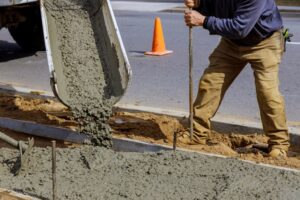
| Concrete | Slab area (SF), thickness, concrete (CY), reinforcing (LBS or SF of mesh), thickened edges, feature footings, finish type |
| Plumbing | Supply piping (LF by size), drain piping (LF), floor drains and trench drains (EA), valves, backflow preventer, tank and connections |
| Mechanical / water treatment | Pumps, filters, disinfection system, controllers, holding tank, equipment enclosure |
| Electrical | Service and panel, conduit and wire (LF), activators, lighting, bonding and grounding |
| Play features | Manufacturer package, freight, installation and anchoring |
| Site amenities | Shade, fencing (LF), benches (EA), paths (SF), landscaping |
How to Estimate a Splash Pad Step by Step
- Review the drawings and specifications. Confirm the system type, feature schedule, surfacing, and who supplies and installs the features. Note any health department requirements.
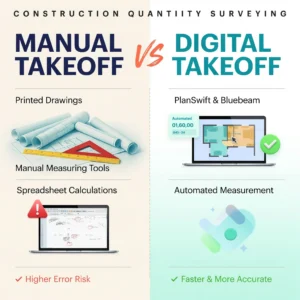
- Take off the pad and site quantities. Measure pad area, slab thickness, excavation depth, base thickness and drainage runs. A detailed concrete takeoff is the backbone of this step.
- Quantify plumbing and drainage. Count drains and features, measure supply and drain piping by size, and list valves, backflow devices and tank connections.
- Price the equipment package. Get current quotes for features, pumps, filtration and controls. Equipment pricing changes, so avoid reusing numbers from old jobs.
- Add electrical, amenities and general conditions. Include mobilization, testing, startup, permits, supervision and cleanup.
- Apply location factors, overhead and profit. Adjust labor and material pricing for the project location, then add markup and contingency appropriate to the level of design.
Common Mistakes When Pricing a Splash Pad
- Treating the pad as simple flatwork and missing the underground plumbing and drainage scope.
- Leaving out the equipment enclosure, tank excavation or electrical service for a recirculating system.
- Assuming the feature manufacturer’s quote includes installation, freight and anchoring.
- Ignoring health department plan review, testing and startup requirements.
- Forgetting ADA access routes, fencing and shade that are shown on the landscape sheets rather than the splash pad sheets.
Frequently Asked Questions
How much does a splash pad cost to build?
It depends heavily on size, features and the water system. Small flow-through pads can cost in the tens of thousands of dollars, while large recirculating spray grounds with support amenities can cost several hundred thousand dollars or more. A project-specific estimate from the drawings is the only reliable number.
Is a recirculating splash pad worth the higher cost?
Recirculating systems cost more upfront but use far less water over time, and some jurisdictions require them. Owners usually compare construction cost against long-term water, sewer and maintenance costs before deciding.
How long does it take to build a splash pad?
Construction time varies with size, weather, equipment lead times and inspections. Feature and equipment lead times are often the controlling item, so order them early.
What trades are involved in building a splash pad?
Typically sitework, concrete, plumbing, mechanical or water treatment, electrical and a feature installer, plus landscaping and amenities. A trade-by-trade estimate helps you check each subcontractor bid.
Can CSI Estimation estimate a splash pad or park project?
Yes. CSI Estimation prepares quantity takeoffs and cost estimates for splash pads, playgrounds and complete parks from your plans. See our public park estimating services.
Get an Accurate Splash Pad Estimate
Splash pads mix concrete, plumbing, mechanical and electrical work in a small footprint, which makes them easy to underprice. CSI Estimation’s estimators produce detailed takeoffs and trade-by-trade cost estimates for park and recreation projects, including concrete and plumbing estimating. Contact CSI Estimation to send your plans and request a quote.