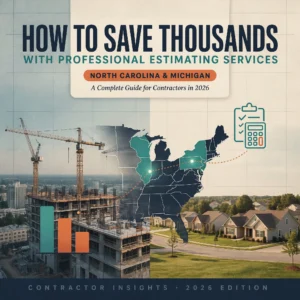

Finding the right contractor is one of the most important decisions you will make on any construction project, and knowing which type of contractor your project actually needs is the first step toward making that decision well.
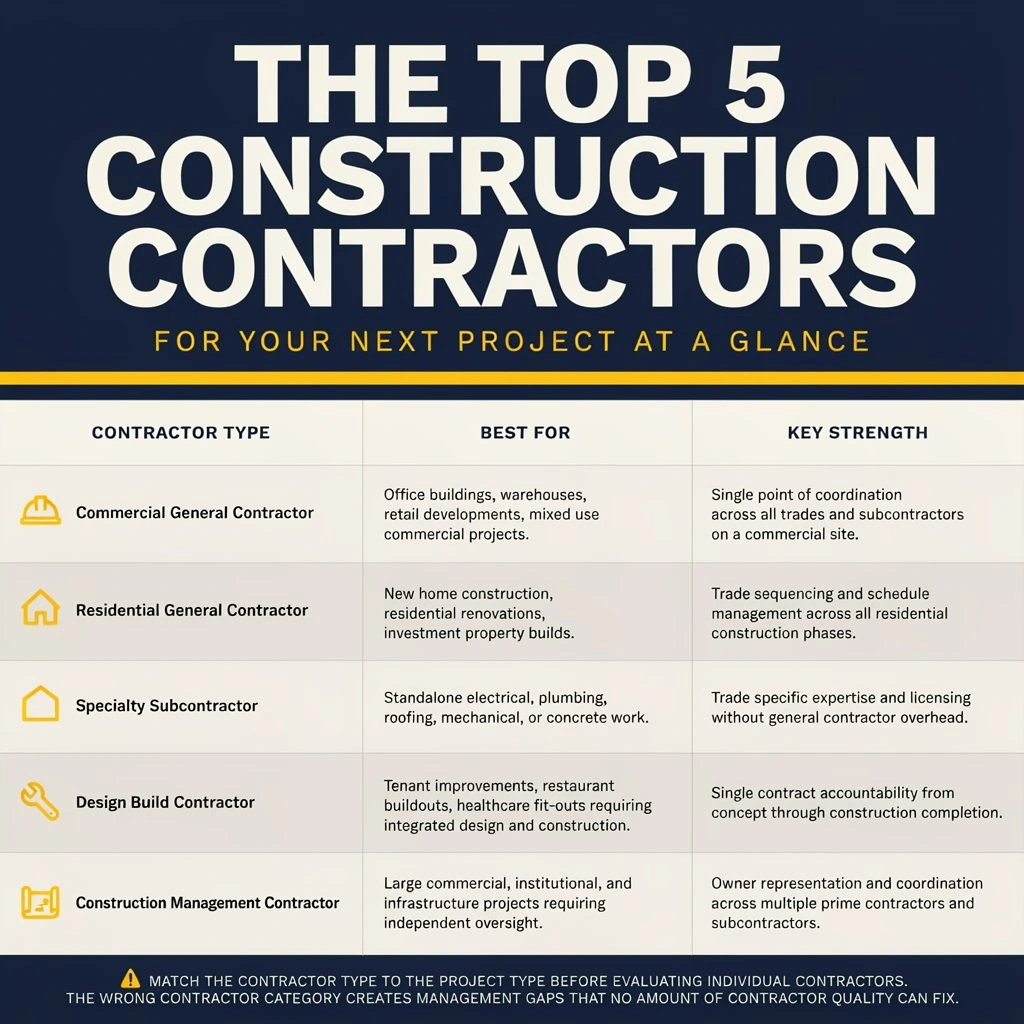
The top 5 construction contractors for your next project are not a fixed list of company names. They are the five categories of contractors that consistently deliver results across residential, commercial, and specialty construction work when selected correctly and evaluated against the right criteria.
This article covers each contractor type, what they do, when you need them, and how to evaluate the options in front of you before signing any agreement. It also covers the practical steps that separate a smart contractor selection from an expensive one.
What Makes a Construction Contractor One of the Best
The best construction contractors share a consistent set of characteristics that have nothing to do with size and everything to do with process, accountability, and track record.
A top contractor carries valid licensing and current insurance for the state and trade in which they operate. They provide clear, itemized proposals that explain what is included and what is not. They have verifiable experience on projects similar in scope and type to yours.
Beyond credentials, the best contractors are communicative throughout the project lifecycle. They flag problems early, maintain accurate scheduling, and do not present change orders as a surprise after work is already underway.
The contractor vetting process should also include reference checks with previous clients on comparable projects. A contractor who performs well on residential renovations may not carry the project management infrastructure needed for a complex commercial build, which is why matching contractor type to project type is as important as evaluating the contractor’s overall reputation.
The Top 5 Construction Contractors for Your Next Project
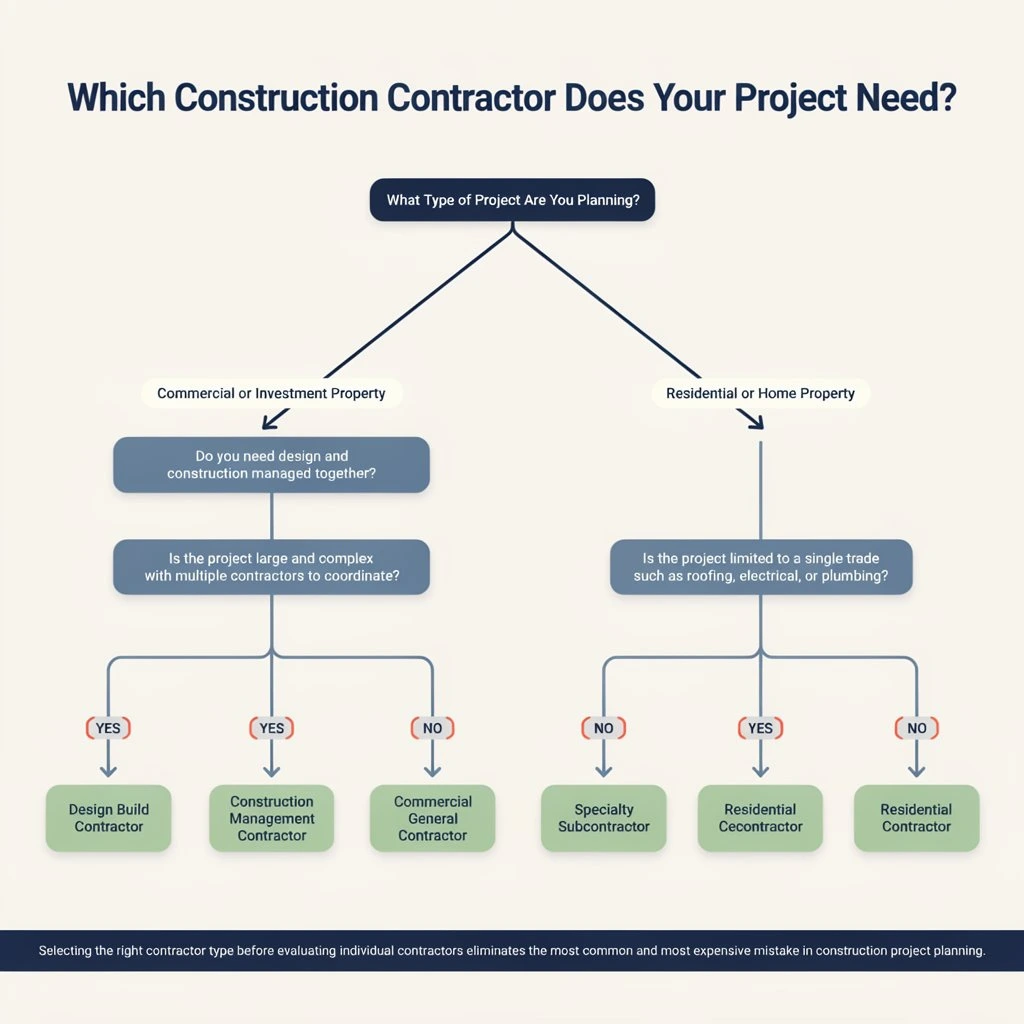
Not every project needs the same type of contractor, and selecting the wrong contractor category is one of the most common and costly mistakes property owners make before construction begins.
The following five contractor types represent the most important categories for anyone planning a construction project in 2026, whether the scope is residential, commercial, or trade-specific.
General Contractors for Commercial Construction Projects
A commercial general contractor manages the full scope of a commercial construction project, coordinating subcontractors, scheduling deliveries, managing site safety, and acting as the primary point of contact between the property owner and the construction team.
For business owners, developers, and investors commissioning office buildings, retail spaces, warehouses, or mixed-use developments, a commercial general contractor is the central figure who brings all trades together under a single management structure.
When evaluating commercial general contractors, look for verifiable experience on projects of similar size and occupancy type, not just project count. A contractor who has built ten small tenant improvement spaces may not have the coordination capacity needed for a ground-up commercial development.
Our commercial estimating services give property owners an independent cost benchmark to measure commercial contractor quotes against before any commitment is made.
Residential General Contractors for Home and Property Builds
Residential general contractors manage the complete construction or renovation of homes and residential properties, coordinating framing, roofing, electrical, plumbing, and finishing trades under a single contract.
For homeowners, property investors, and residential developers, a qualified residential general contractor removes the complexity of managing individual subcontractors separately, which is particularly valuable on new construction where the sequencing of trades determines whether the project stays on schedule.
Choosing the right contractor at the residential level means verifying that the contractor holds a valid residential builder’s license in your state and has completed projects of comparable size and style to yours within the past two to three years.
Our residential estimating services provide homeowners and investors with verified quantity and cost data to evaluate residential contractor quotes before signing a building agreement.
Specialty Subcontractors for Trade-Specific Work
Specialty subcontractors focus on a single trade, such as electrical, plumbing, mechanical, roofing, or concrete work. They are typically hired directly by a general contractor but are sometimes engaged directly by a property owner for standalone trade-specific projects.
When a project requires only one trade rather than full construction management, engaging a specialty subcontractor directly can save significant overhead compared to routing the work through a general contractor who adds a management layer on top of the subcontractor’s base price.
The contractor bidding process for specialty subcontractors should include at least three competitive quotes from licensed trade contractors with verifiable insurance and documented experience on projects of similar complexity and scale.
Design-Build Contractors for Single-Source Project Delivery
Design-build contractors provide both architectural design and construction services under a single contract, which eliminates the coordination gap between designer and builder that causes delays and scope disputes on traditionally procured projects.
For entrepreneurs and business owners who want a single point of accountability from concept to completion, the design-build model offers faster delivery timelines and fewer adversarial contract situations than the traditional design, bid, build sequence.
Design-build contractors are particularly well-suited to commercial tenant improvements, restaurant buildouts, and healthcare facility fit-outs where the interior design and construction scope are deeply interdependent and speed to occupancy is a priority.
Construction Management Contractors for Complex Projects
Construction management contractors are hired by property owners to oversee and coordinate the entire construction process on their behalf, often without performing any physical construction work themselves.
This model is common on large commercial, institutional, and infrastructure projects where the scope is too complex or the owner lacks the in-house expertise to manage multiple prime contractors, an extensive subcontractor network, and a multi-year construction schedule simultaneously.
A construction management contractor acts as the owner’s representative throughout design and construction, providing scheduling, cost control, contractor coordination, and quality oversight services that protect the owner’s investment at every stage of the project lifecycle.
What to Look for Before Hiring a Construction Contractor
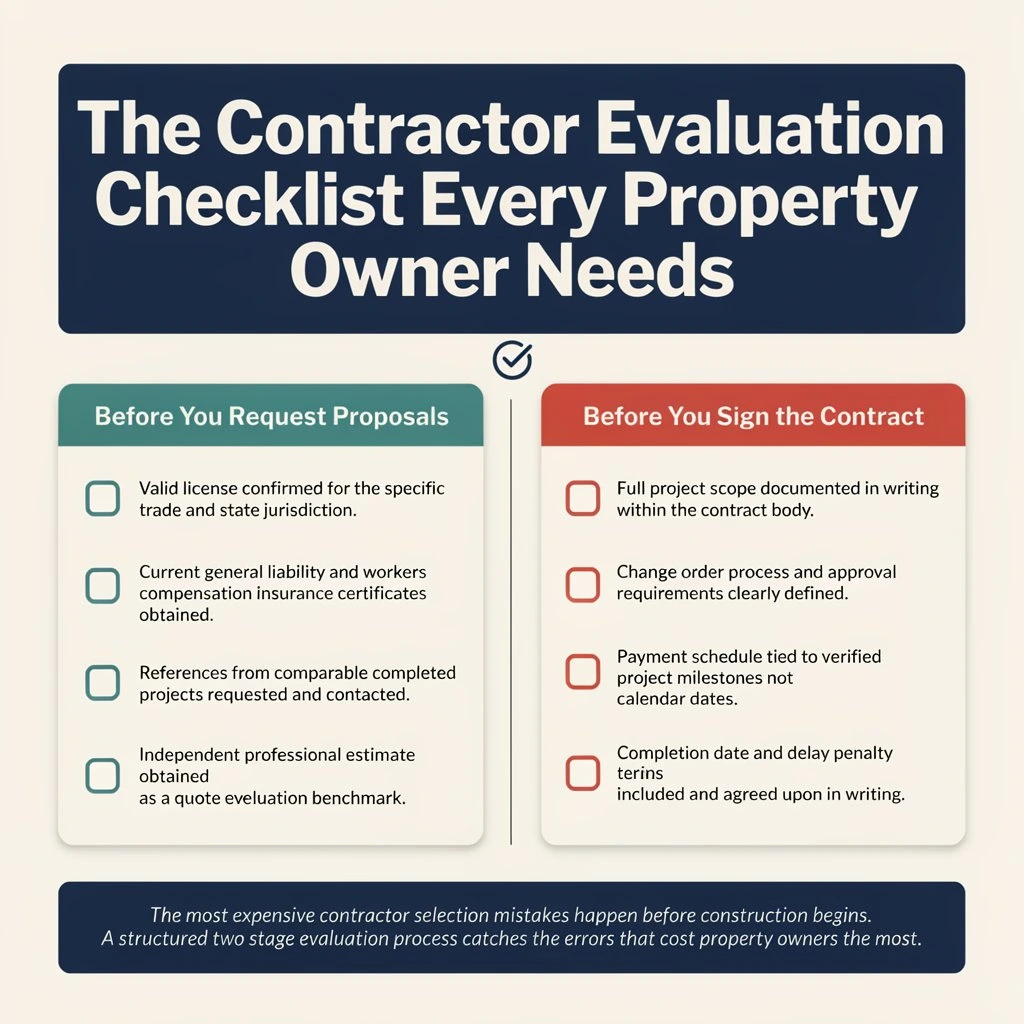
Selecting a contractor type is only the first step. Evaluating the specific contractors available within that category requires a structured approach that goes beyond comparing prices on a spreadsheet.
Verifying Licenses, Insurance, and Project Experience
Before requesting a proposal from any contractor, confirm that they hold a current and valid license for the specific work type and jurisdiction your project falls within. Licensing requirements vary significantly by state and trade, and an unlicensed contractor exposes the property owner to liability that a licensed contractor’s insurance would otherwise cover.
Insurance verification should include general liability coverage and workers’ compensation at a minimum. For commercial projects, additional coverage requirements may apply depending on the contract type and owner requirements.
Project experience verification should go beyond a contractor’s self-reported portfolio. Request references from projects of comparable scope completed within the last two years and speak directly with those clients about schedule performance, communication quality, and final cost accuracy relative to the original proposal.
Comparing Contractor Quotes Against Independent Estimates
One of the most valuable steps a property owner can take before selecting a contractor is obtaining an independent professional estimate to use as a benchmark against which competing contractor quotes can be objectively evaluated.
Without an independent baseline, the property owner has no way to determine whether a low quote reflects genuine efficiency or missing scope, and no way to determine whether a high quote reflects quality or inflated margin.
Our construction cost estimating services produce verified quantity and pricing data that give property owners and developers a defensible benchmark for evaluating any number of contractor quotes before a selection decision is made.
Common Mistakes to Avoid When Selecting a Contractor
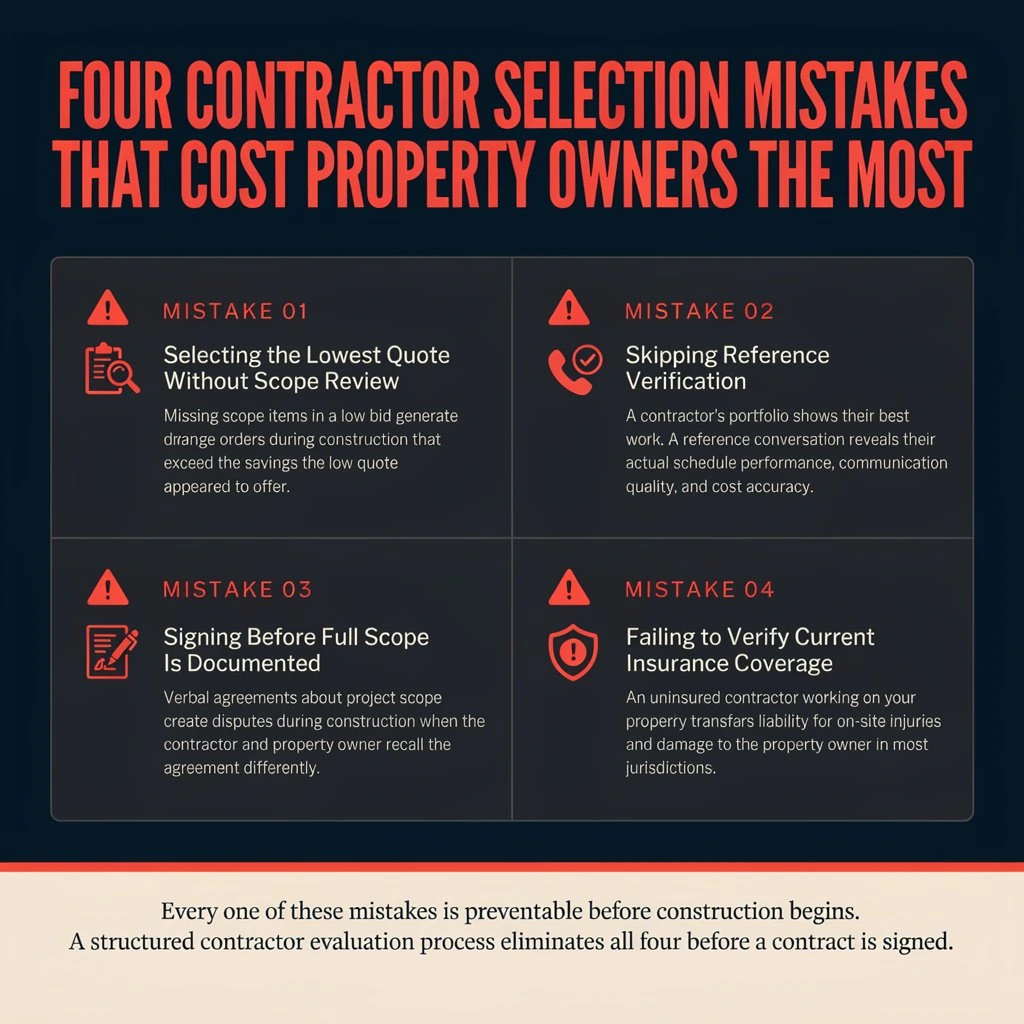
The most expensive mistakes in contractor selection happen before construction begins, and most of them trace back to decisions made too quickly under the pressure of a project start date.
Selecting the lowest quote without understanding what it includes or excludes is one of the most common errors. A low bid that omits critical scope items will generate change orders during construction that quickly exceed what a more complete, higher bid would have cost from the start.
Skipping the reference verification step is another frequent mistake. A contractor’s portfolio images and website communicate the best version of their work. A conversation with a previous client communicates what the experience of working with them actually involves.
Signing a contract before the full scope is documented in writing creates disputes during construction when the property owner and contractor have different recollections of what was agreed. Every item included in the contract price should be specified in writing before any work begins.
Failing to verify insurance coverage before work starts is a risk that many property owners underestimate until something goes wrong on site and the liability question arises. Always request and verify current certificates of insurance before a contractor’s crew enters the project site.
How Professional Estimating Strengthens the Contractor Selection Process
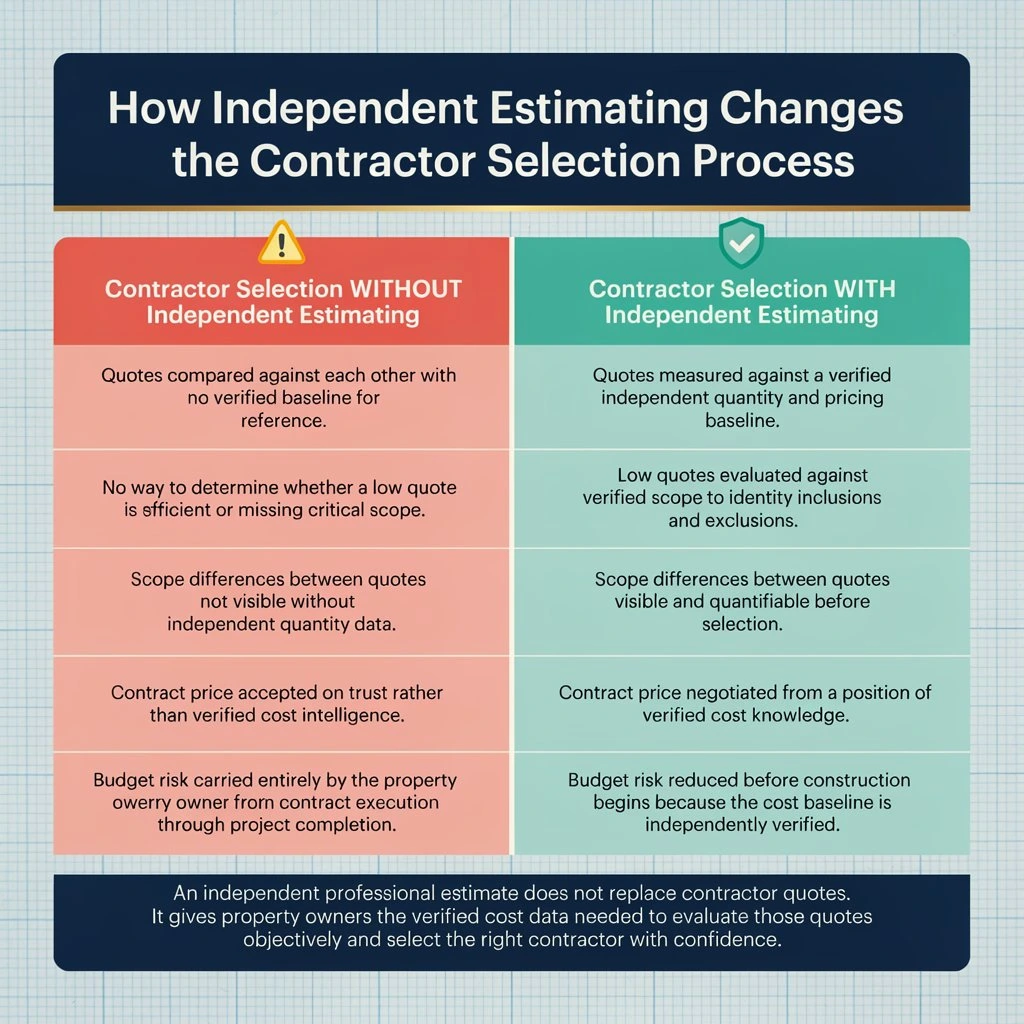
Professional estimating and contractor selection are not separate processes. They are two parts of the same pre-construction decision, and the property owners who treat them together consistently make better contractor selections than those who treat them separately.
When a property owner has a verified independent estimate in hand before soliciting contractor proposals, the entire evaluation process changes. Each quote can be measured against a known quantity baseline rather than against other quotes that may each include different scope assumptions.
This is where construction estimating services for general contractors deliver direct value to property owners and developers who want to select contractors with confidence rather than with hope.
At CSI Estimation LLC, professional estimating support is available across residential and commercial project types, giving clients the verified cost intelligence they need to evaluate contractors, negotiate contracts, and enter construction with a budget they can stand behind.
To get an independent estimate before your next contractor selection, reach out to our team and request a free quote today.
Frequently Asked Questions
How Do You Evaluate Construction Contractors Before Hiring
Evaluate construction contractors by verifying their license and insurance, checking references from comparable completed projects, reviewing their proposal for scope completeness, and comparing their quote against an independent professional estimate. Never select a contractor based on price alone without understanding what the price includes and excludes.
What Is the Difference Between a General Contractor and a Specialty Contractor
A general contractor manages the full scope of a construction project and coordinates multiple subcontractors under a single contract. A specialty contractor focuses on a single trade, such as electrical, plumbing, or roofing, and is typically hired either by the general contractor or directly by the property owner for trade-specific work.
Why Should You Get an Independent Estimate Before Choosing a Contractor
An independent estimate gives you a verified cost baseline to measure contractor quotes against objectively. Without it, you have no way to determine whether a quote is accurate, complete, or competitively priced, which means contractor selection becomes a trust exercise rather than a data-driven evaluation.
Final Thoughts on the Top 5 Construction Contractors for Your Next Project
The top 5 construction contractors for your next project are the five contractor categories that match the most common project types, which are commercial general contractors, residential general contractors, specialty subcontractors, design-build contractors, and construction management contractors.
Selecting the right contractor type for your project scope is the first decision. Evaluating the specific options within that category using verified licenses, references, and independent cost benchmarks is the second.
Property owners and developers who approach contractor selection with verified cost data consistently make better decisions, secure better contracts, and deliver projects closer to their original budget than those who rely on contractor quotes alone.
Before your next project goes to bid, get an independent professional estimate that gives you the cost intelligence to select the right contractor with confidence.