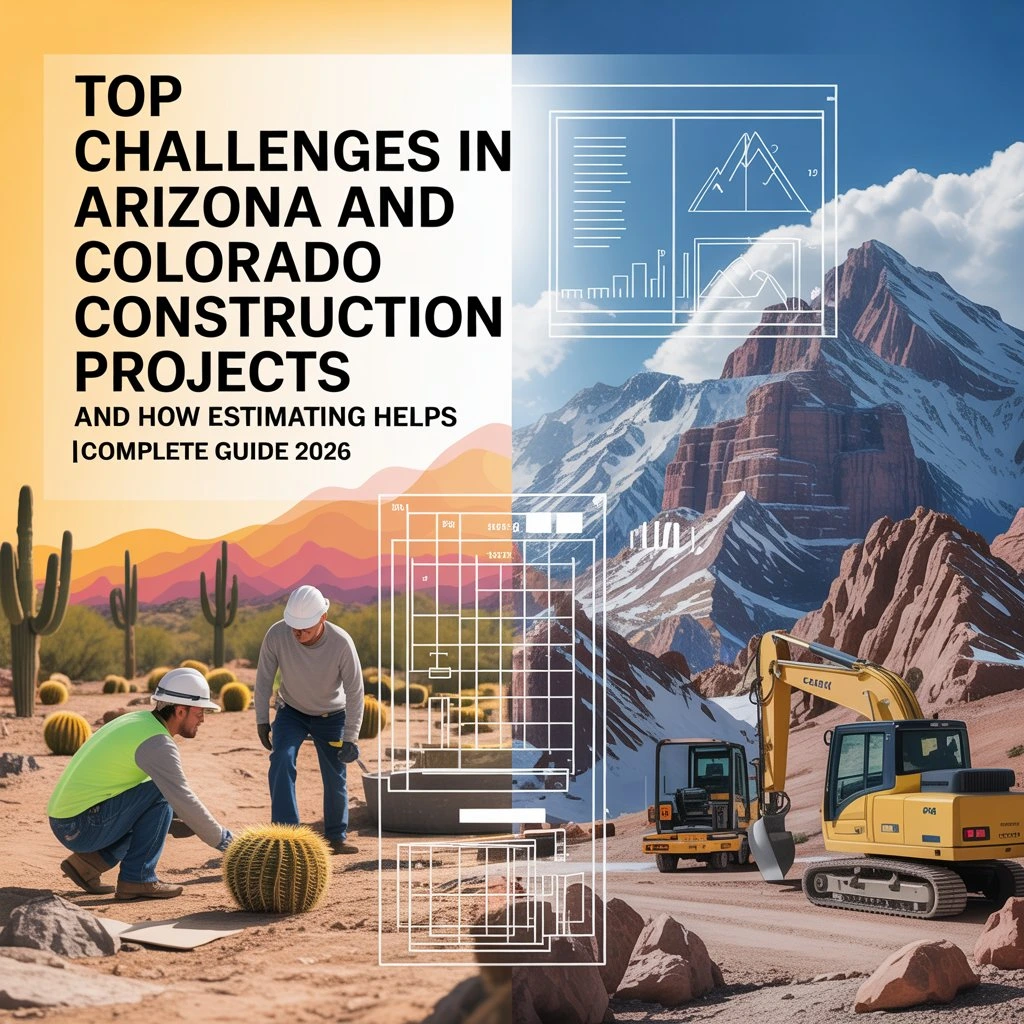
Construction in Arizona and Colorado is not for the unprepared. Contractors, developers, subcontractors, and project owners across both states are dealing with rising material costs, shrinking labor pools, strict code requirements, and project budgets that spiral out of control before the first foundation is even poured. Whether you are managing a commercial build in Phoenix, a residential development in Denver, or an industrial project anywhere along the Front Range, the financial risks are real, and the margin for error is razor-thin.
At CSI Estimations LLC, we provide professional Construction Cost Estimating Services that Arizona and Colorado contractors and developers rely on to bid accurately, budget confidently, and build profitably. In this article, you will find a complete breakdown of the top challenges in Arizona and Colorado construction projects and how estimating helps you take control of every one of them before they take control of your budget.
Why Arizona and Colorado Construction Markets Are Uniquely Challenging
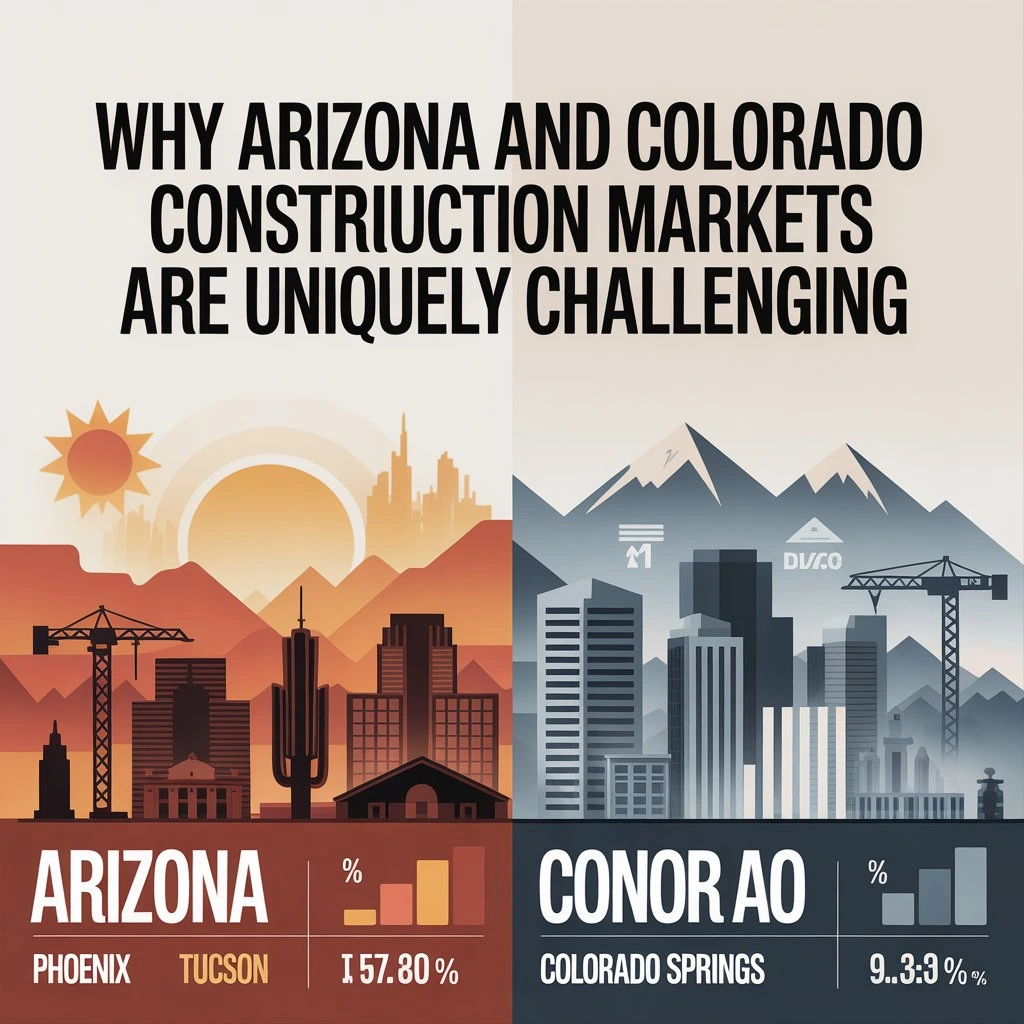
Arizona and Colorado are two of the most actively growing states in the entire country. According to the U.S. Census Bureau, the Phoenix metro area has consistently ranked among the top three fastest-growing large cities in the United States, with Tucson not far behind in terms of residential and commercial development demand. Denver construction projects have surged alongside a population increase that has made the Denver metro one of the most competitive construction markets in the Mountain West. Colorado Springs has seen similar momentum, with infrastructure, healthcare, and residential projects all competing for the same shrinking pool of contractors, materials, and skilled labor.
What makes this particularly challenging is that Arizona desert construction challenges and Colorado mountain construction challenges are not the same problem. They require entirely different engineering approaches, material specifications, and scheduling strategies. Material suppliers are stretched. Skilled tradespeople are in short supply. Permit offices are backed up. And through all of it, project owners still expect on-time, on-budget delivery. Understanding why these two markets are uniquely challenging is the first step toward managing them successfully, and that starts with understanding the specific challenges driving costs up across both states.
Challenge 1: Extreme Climate Conditions and Their Impact on Construction Costs
Arizona and Colorado sit on opposite ends of the climate spectrum, and both extremes create direct, measurable cost impacts on construction projects that contractors from other regions consistently underestimate.
How Arizona Heat Affects Construction Materials and Scheduling
Arizona summers regularly push temperatures above 110 degrees Fahrenheit in the Phoenix valley and surrounding areas. Concrete must be poured during cooler morning hours, often requiring chilled water or ice added directly to the mix to control the hydration process and prevent premature curing. Roofing materials, exterior coatings, and sealants all require higher-grade, UV-resistant specifications to perform under sustained desert heat and intense sun exposure. HVAC systems must be sized for cooling loads that far exceed national averages. Each of these requirements adds real, quantifiable cost to every Arizona construction project, and every one of them must be captured accurately in the project estimate from day one.
How Colorado Altitude and Snow Loads Drive Up Structural Costs
Colorado presents an entirely different set of climate-driven cost pressures. Roof structures in mountain communities like Breckenridge, Vail, and Aspen must be engineered for snow loads that can exceed 100 pounds per square foot, which significantly increases framing material quantities and structural connection costs compared to lower elevation projects. Freeze-thaw cycling damages concrete foundations and flatwork if not properly designed and detailed, requiring higher-strength concrete mixes and more carefully controlled curing processes. Altitude also affects mechanical system performance, requiring adjustments to HVAC equipment sizing that add cost to every Colorado commercial and residential project.
Professional Structural Steel Estimating Services and concrete estimating that accounts for these climate-driven structural requirements from the very beginning of the budgeting process is not optional in Colorado. It is the difference between a project that finishes on budget and one that hits a wall of change orders mid-construction.
Challenge 2: Material Price Volatility and Supply Chain Disruptions
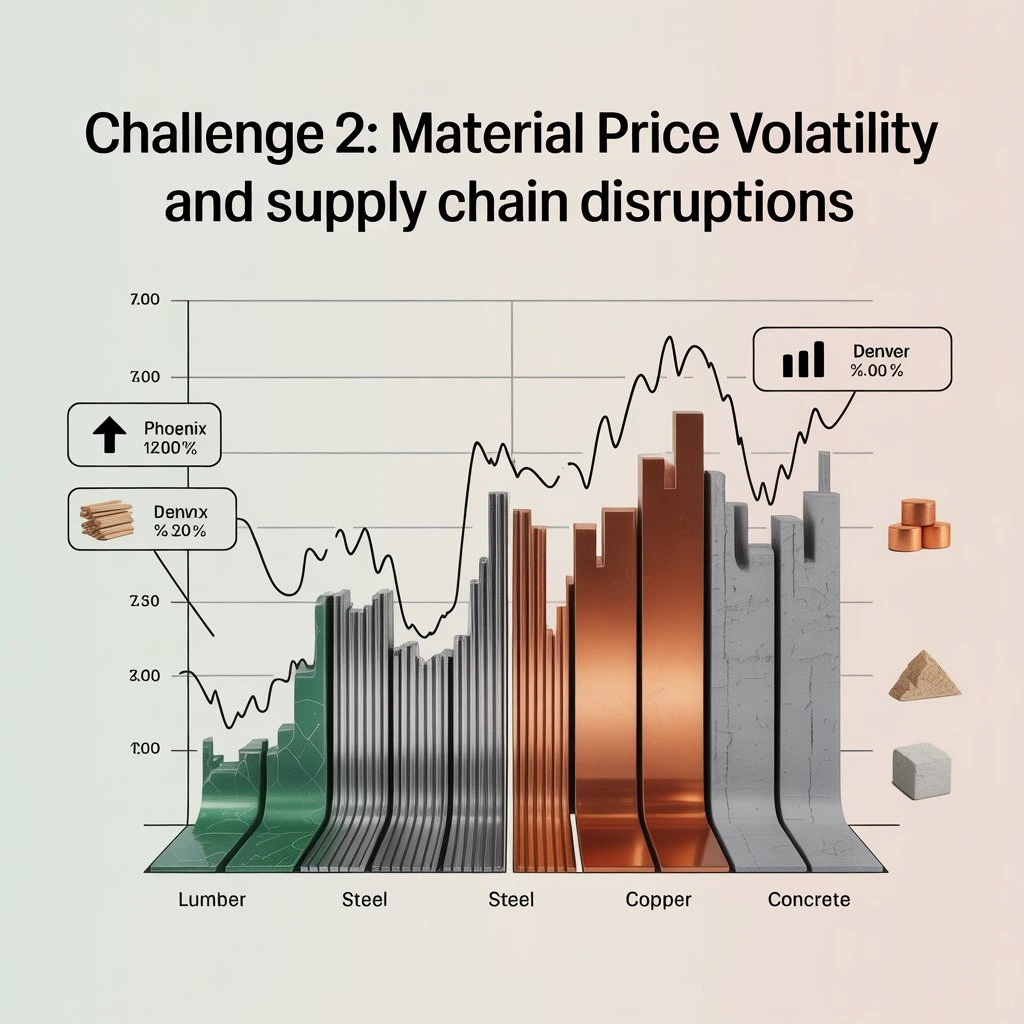
The construction industry has been dealing with material price volatility for years, and the problem remains very much alive in both Arizona and Colorado. Lumber, steel, copper, concrete, and roofing materials have all experienced significant price swings driven by supply chain disruptions, tariff policies, transportation costs, and demand fluctuations. For contractors in both states, these swings are compounded by regional growth pressure. High construction demand in Phoenix and Denver means local suppliers are often stretched thin, and lead times on key materials can extend to lengths that create real scheduling and cash flow problems.
A contractor who locks in a contract price based on material quotes that are already several months old is taking on enormous financial risk. The gap between estimated cost and actual cost can widen dramatically in a matter of weeks when material prices are moving in an active market like Arizona or Colorado.
Professional Quantity Takeoff Services, combined with current supplier pricing data, are the foundation of every accurate material estimate. At CSI Estimations LLC, our estimators track live material costs and factor current pricing into every estimate, along with appropriate contingency allowances that reflect the volatility that is a known reality in today’s construction market.
Challenge 3: Labor Shortages and Rising Workforce Costs
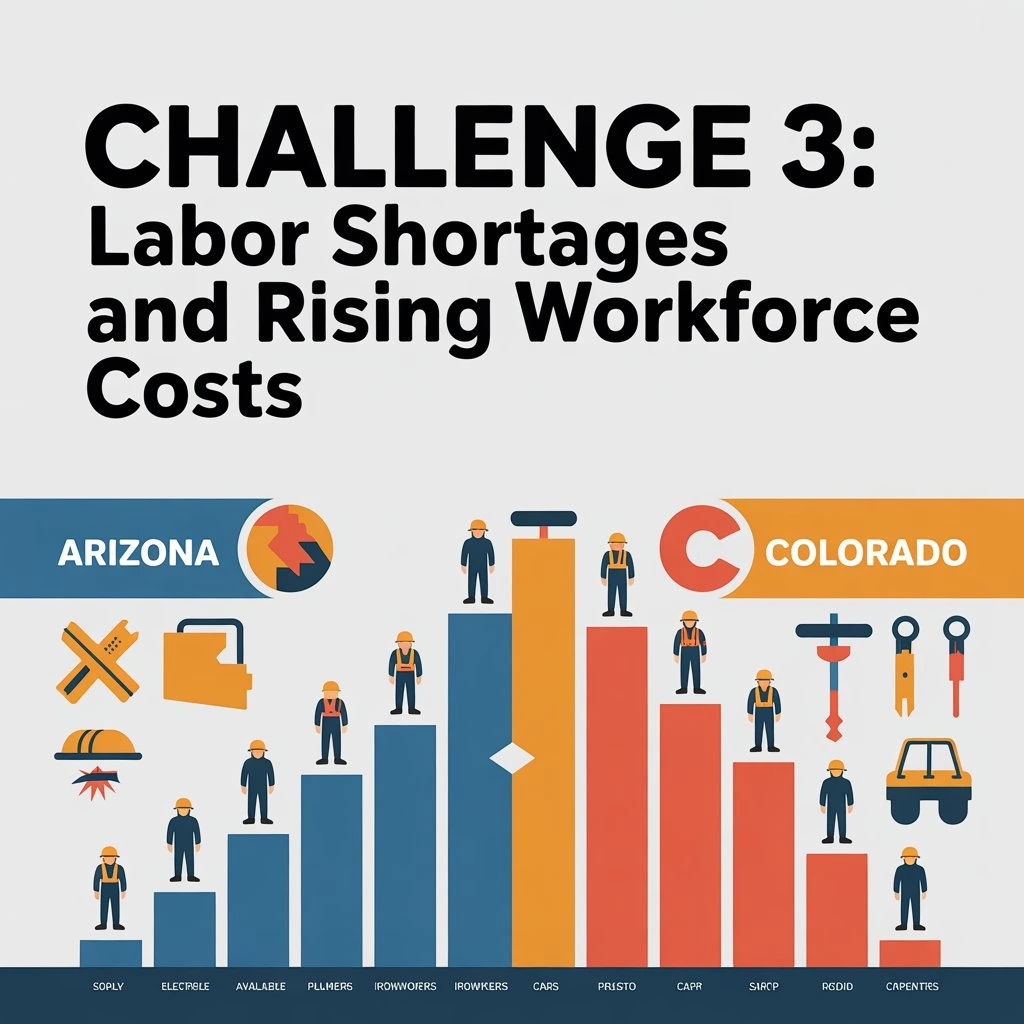
Both Arizona and Colorado are facing a construction labor shortage that is widely acknowledged across the industry. Electricians, plumbers, carpenters, ironworkers, masons, and HVAC technicians are in short supply relative to the volume of active work in both states. This supply and demand imbalance has pushed prevailing wage rates up significantly in Phoenix, Denver, and their surrounding suburbs, making labor cost accuracy more critical than ever for contractors trying to protect their profit margins.
In Colorado, the challenge is even more pronounced in resort and mountain communities, where the cost of housing for workers creates an additional barrier to attracting and retaining skilled labor. Contractors working on projects in Summit County, Eagle County, and other high-elevation areas often face labor costs that are substantially higher than Front Range market rates, and those premium costs must be captured precisely in the project estimate to avoid a loss.
Our Construction Estimating Services for General Contractors use current prevailing wage data and realistic trade-specific productivity rates to ensure that every labor estimate reflects today’s actual market conditions, not outdated historical averages that guarantee underbidding on labor-heavy scopes.
Challenge 4: Complex Building Code Compliance in Arizona and Colorado
Both states have building codes with unique requirements driven by their respective climate and geographic conditions. Arizona energy codes require cool roof standards, high-performance glazing minimums, and HVAC efficiency thresholds driven by the extreme heat environment. Colorado structural codes require snow load design criteria, seismic zone considerations in certain regions, and wildland urban interface fire code requirements that affect exterior material selections in mountain communities.
Code compliance failures discovered during plan review or inspections cause costly redesigns, schedule delays, and change orders that could have been entirely avoided with proper upfront cost planning. Experienced estimators who work specifically in Arizona and Colorado already know the code-driven cost requirements for both states and factor them directly into the initial project budget.
Specific code compliance costs that inexperienced estimators routinely miss include fire suppression system requirements triggered by building size thresholds, mandatory energy-efficient glazing upgrades, structural reinforcement required to meet local snow load codes, and permit and inspection fee schedules that vary significantly by municipality. Our Budget Estimating Services capture every one of these costs before a single drawing goes to the permit office.
Challenge 5: Inaccurate Bids and Cost Overruns
Inaccurate bidding is the single most financially damaging problem a contractor can face in a competitive market. The risk runs in both directions. Overbidding loses the contract to a competitor who priced it more accurately. Underbidding wins the contract but guarantees a financial loss on the project. In both Arizona and Colorado, contractors are particularly vulnerable to bid inaccuracy because of the rapid material price changes, climate-driven scope additions, and complex code compliance costs that generic estimating approaches consistently miss.
Contractors who rely on outdated cost databases, generic estimating templates, or rushed in-house estimates are systematically exposing themselves to this risk on every single project they bid. The solution is not working harder on estimates. The solution is working with professional estimators who bring current market data, regional expertise, and trade-specific precision to every bid.
Our Subcontractor Estimation Services and general contractor estimating solutions are built on detailed quantity takeoffs from project drawings that capture every scope item, leave no hidden costs unaddressed, and produce material quantity lists that contractors can take directly to suppliers for accurate, current pricing.
Challenge 6: Tight Bidding Timelines and Bid Pressure
Bid windows in the Arizona and Colorado construction markets are often extremely compressed. Contractors are frequently given five to ten business days to price complex commercial, multifamily, or industrial projects. This time pressure leads directly to rushed estimates, missed scope items, and bid inaccuracies that cost contractors money regardless of whether they win or lose the bid.
Outsourcing estimating to a professional firm is the practical, proven solution that gives contractors access to professional estimating capacity on demand without the overhead of maintaining a full-time in-house estimating department. At CSI Estimations LLC, we deliver accurate estimates within 24 hours for most project types, which means our clients never miss a bid deadline and never submit a rushed estimate again.
Our Outsource Estimating Services are specifically designed for contractors in high-demand markets like Arizona and Colorado who need fast, accurate, and professionally prepared estimates without the fixed overhead of an in-house estimating team.
Challenge 7: Managing Risk and Unforeseen Site Conditions
Unforeseen site conditions are one of the most common causes of budget overruns on Arizona and Colorado construction projects. In Arizona, caliche hardpan soil is present across large portions of the Phoenix and Tucson basins, requiring specialized excavation equipment and adding high cost to any below-grade scope that was not budgeted for in the original estimate. In Colorado, expansive clay soils require engineered foundation solutions that carry a meaningful cost premium over standard footing and foundation designs.
Underground utilities, previously undocumented site improvements, and contaminated soils on infill development sites in both states create additional risk exposure that contractors and developers must budget for in advance through proper pre-construction cost analysis and contingency planning.
Our Sitework Estimating Services specifically address these regional site condition risks by building realistic contingency allowances and site-specific scope items into every estimate, giving our clients the financial buffer they need to absorb unforeseen conditions without blowing the project budget.
If you are preparing for your next Arizona or Colorado construction project and need a fast, accurate estimate, contact CSI Estimations LLC today and let our team get started on your bid.
How CSI Estimations LLC Solves These Challenges for Arizona and Colorado Contractors
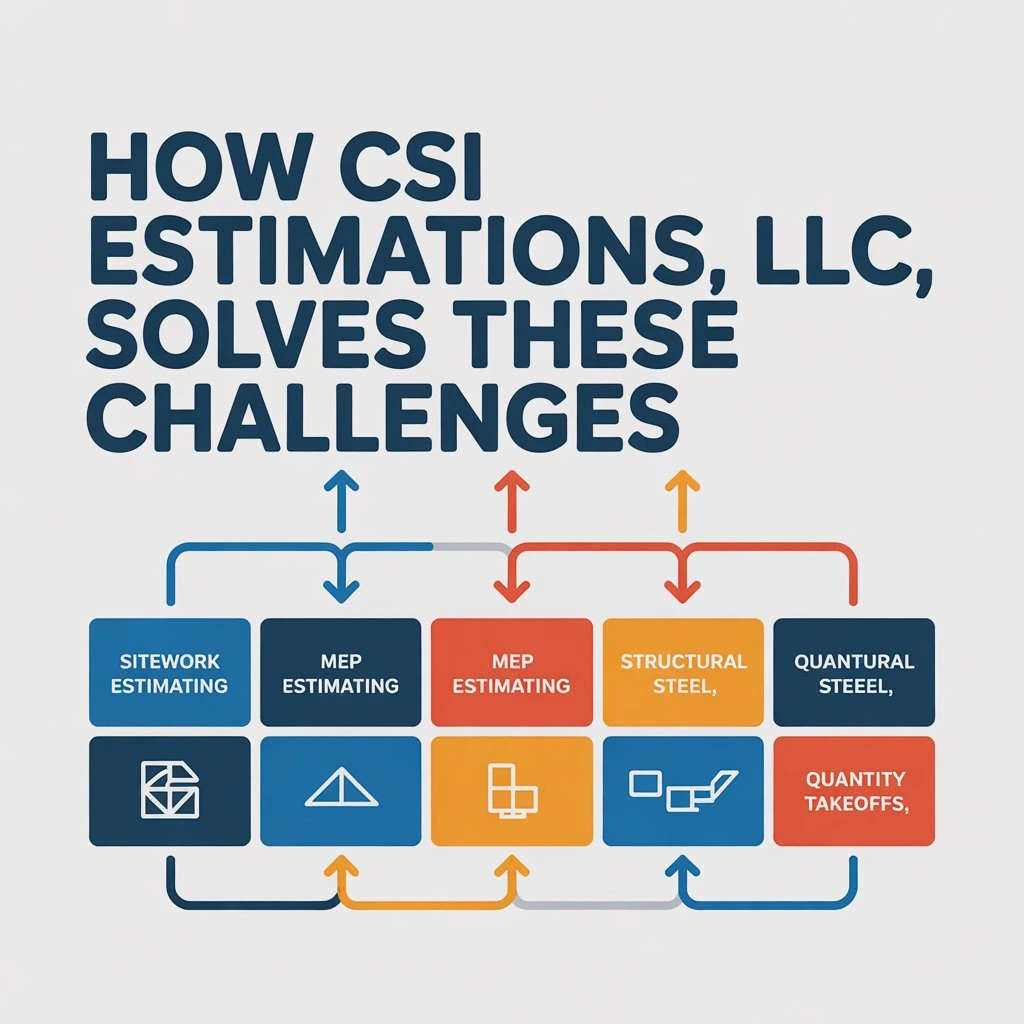
Every challenge covered in this article, from extreme climate conditions and material price volatility to labor shortages, code compliance complexity, tight bid timelines, and unforeseen site risks, has one proven solution: professional construction estimating from a firm that knows both markets deeply.
At CSI Estimations LLC, we provide Arizona Construction Estimating Services and Colorado Construction Estimating Services that cover every trade, every project type, and every scope size. Our services include residential estimating, commercial estimating, MEP Estimating Services, structural steel estimating, concrete estimating, quantity takeoffs, and full bid preparation support. We deliver within 24 hours, price every estimate using current market data, and back our work with a 100 percent accuracy commitment.
Whether you are a general contractor, subcontractor, developer, or project owner operating anywhere in Arizona or Colorado, CSI Estimations LLC is the estimating partner that eliminates bid risk and puts you in a position to win profitable work consistently.
Frequently Asked Questions
What are the biggest challenges in Arizona construction projects?
The biggest challenges in Arizona construction projects include extreme heat effects on materials and scheduling, complex energy code compliance requirements, rapid population-driven demand growth in Phoenix and Tucson, and material price volatility amplified by high regional construction activity. Professional construction cost estimating Arizona contractors trust helps address every one of these challenges through accurate, current market-based project budgets.
How does construction estimating help avoid cost overruns in Colorado?
Professional construction estimating helps avoid cost overruns in Colorado by accounting for snow load structural requirements, current labor market wage rates, live material pricing, and building code compliance costs from the very beginning of the budgeting process. Accurate estimates built on current Colorado market data eliminate the scope gaps and pricing assumptions that cause budgets to fail mid-project.
Why should Arizona and Colorado contractors outsource their estimating?
Outsourcing estimating gives contractors access to professional estimating expertise, current market pricing data, and fast turnaround times without the overhead cost of maintaining an in-house estimating department. For contractors in high-demand markets like Arizona and Colorado, outsourced estimating is the most cost-effective way to bid more work accurately and win more profitable contracts.
Conclusion:
The top challenges in Arizona and Colorado construction projects and how estimating helps solve them come down to one fundamental truth: every financial risk in construction is manageable when it is identified, quantified, and planned for in advance. Climate conditions, material price swings, labor shortages, code compliance costs, site risks, and bid pressure all become controllable variables in the hands of a professional estimator who knows both markets inside and out.
CSI Estimations LLC is the partner for contractors, developers, subcontractors, and project owners across Arizona and Colorado. Visit csiestimationllc.com today to request your fast, accurate, and professionally prepared construction estimate and take the first step toward bidding with confidence on every project you pursue.