What Is Construction Cost Estimating?
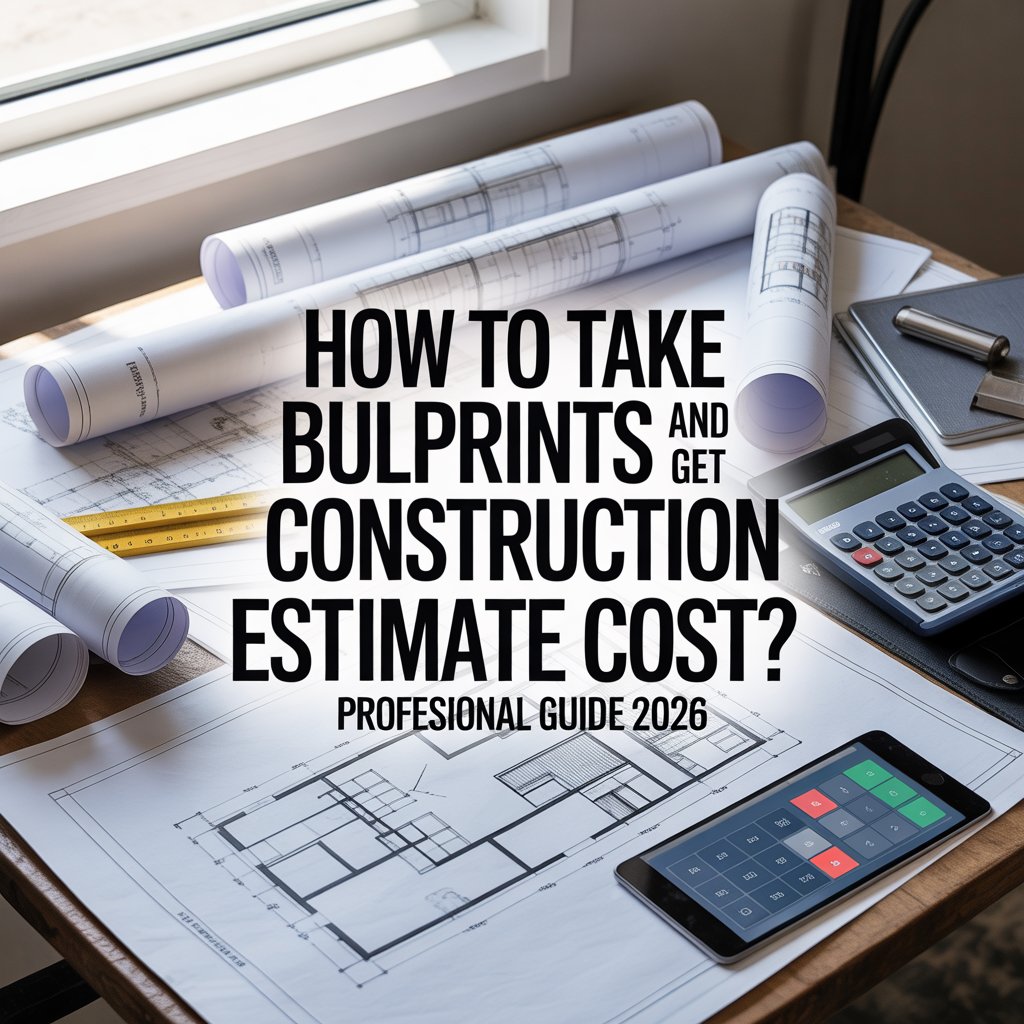
Construction cost estimating is the structured process of predicting the total expenses required to complete a construction project based on drawings, specifications, and project requirements. It transforms building blueprints into detailed financial projections that guide budgeting, bidding, and project execution. Accurate estimating ensures that every material, labor hour, and indirect expense is accounted for before construction begins.
What Is Construction Cost Estimating?
At its core, construction cost estimating involves calculating both direct and indirect costs associated with a project.
Direct costs: Include materials, labor, equipment, and subcontractor work directly tied to physical construction. These are measurable items extracted from project drawings and specifications.
Indirect costs:
On the other hand, include overhead, supervision, insurance, permits, bonding, administrative expenses, and temporary facilities. While not physically visible in the structure, these costs are essential to project completion.
A key component of estimating is blueprint-based quantity extraction, often referred to as a takeoff. Estimators carefully review architectural, structural, and MEP drawings to measure quantities of concrete, steel, framing, finishes, and other materials. These quantities are then priced using current market rates to develop a complete cost projection.
Why Is Estimating Important?
Estimating plays a vital role in preventing cost overruns. Without a detailed financial plan, projects are vulnerable to budget shortfalls, delays, and disputes. A well-prepared estimate sets realistic expectations from the start.
It also supports financial forecasting, allowing contractors and developers to assess feasibility, secure funding, and plan cash flow effectively. Accurate projections help decision-makers allocate resources strategically.
Risk mitigation is another critical function. By identifying potential uncertain times such as material price fluctuations or labor shortages estimators can include contingencies that protect profitability.
Using a structured system like CSI Estimations enhances forecasting by organizing cost categories, validating calculations, and ensuring that no major expense is overlooked.
Who Creates Construction Cost Estimates?
Construction cost estimates are typically prepared by professional Estimators who specialize in analyzing drawings and pricing construction work. They combine technical knowledge with cost data expertise.
General contractors often develop detailed estimates when preparing competitive bids, coordinating input from subcontractors and suppliers.
Architects may create preliminary or conceptual budgets during early design stages to assess project feasibility before final drawings are complete.
Construction managers also contribute to cost planning, particularly in design-build or negotiated contracts, where budgeting and scheduling are integrated early in the process.
Together, these professionals ensure that blueprint information is translated into accurate and actionable construction cost projections.
Construction Takeoff – The Foundation of Blueprint Estimating
A Construction takeoff is the critical first step in turning building blueprints into an accurate cost estimate. Before pricing materials or calculating labor, estimators must determine exactly what and how much is required. Without a precise takeoff, even the most advanced pricing methods will produce unreliable results.
What Is a Construction Takeoff?
A Construction Takeoff is the process of measuring and listing quantities of materials directly from architectural and engineering drawings. It translates visual plans into numerical data that can be priced and analyzed.
Estimators carefully read architectural sheets (floor plans, elevations, sections, finish schedules) and structural sheets (foundation plans, framing layouts, reinforcement details). Each drawing contains critical information about dimensions, materials, and construction assemblies.
The goal is to extract measurable quantities such as:
- Cubic yards of concrete
- Tons of steel
- Linear feet of framing
- Square feet of drywall or flooring
These quantities form the foundation of the overall construction cost estimate.
How to Perform a Blueprint Takeoff
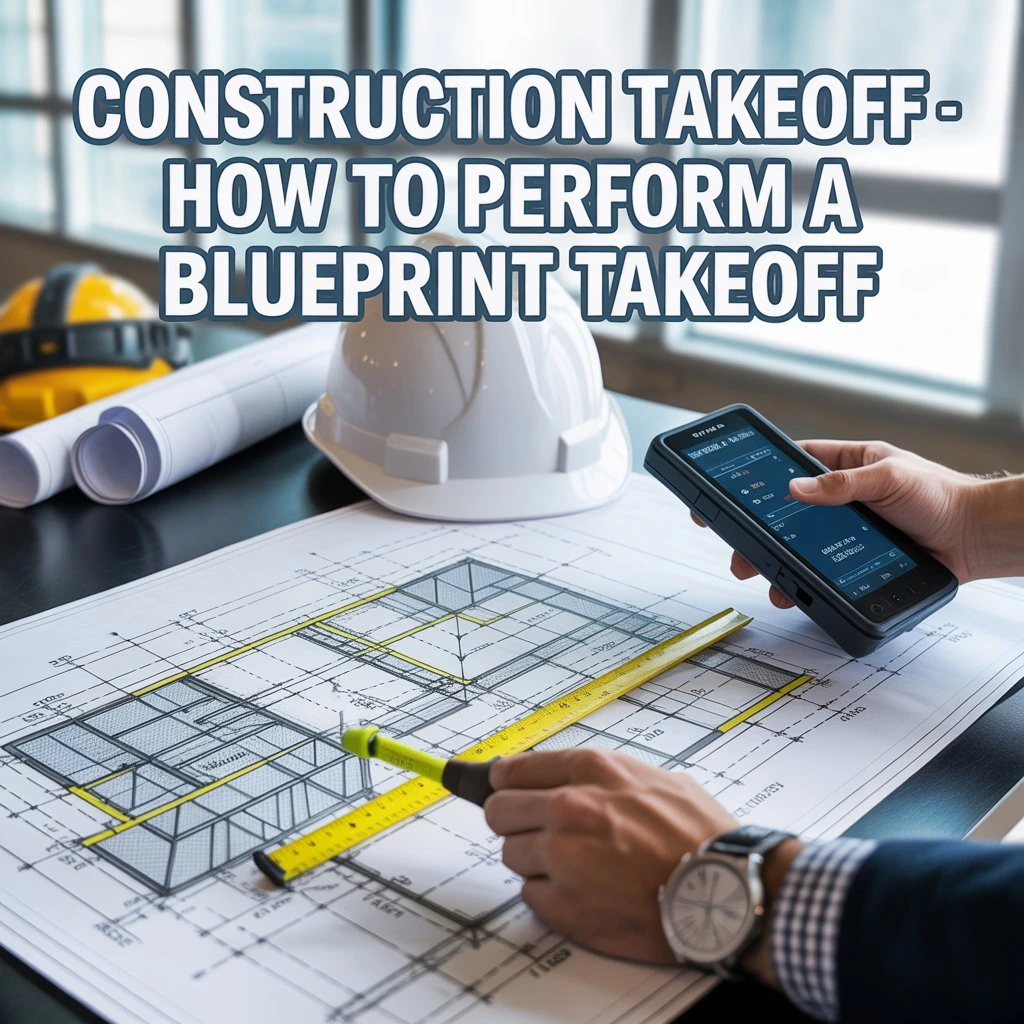
Performing an accurate blueprint takeoff requires a systematic approach:
- Review Architectural Drawings
Start by examining all relevant plans, specifications, and attachments to fully understand project scope and design intent. - Identify Materials
List all material components required for the project, including structural, exterior, interior, and mechanical systems. - Measure Quantities
Use scaled drawings (manual methods) or digital tools to calculate lengths, areas, volumes, and counts. Accuracy at this stage directly impacts overall cost precision. - Categorize Assemblies
Group materials into logical assemblies (e.g., foundation system, wall assembly, roofing system). Organized categorization improves pricing efficiency and reduces missed items.
Digital vs Manual Takeoffs
Manual takeoffs involve printed drawings, scale rulers, and spreadsheets. While effective, they are time-consuming and more prone to human error. Digital takeoff software improves speed and accuracy by allowing estimators to measure directly from electronic plans, automatically calculate quantities, and store data systematically.
Digital tools also enable better software integration, linking quantities to pricing databases and cost management systems. This reduces duplication and improves collaboration across project teams.
CSI Estimations supports organized takeoffs by structuring extracted quantities into clear cost categories, verifying completeness, and ensuring alignment between blueprint data and pricing inputs. By combining accurate quantity extraction with systematic cost validation, CSI Estimations strengthens the entire estimating workflow and minimizes costly oversights.
Estimate vs. Budget: Tools to Guide Construction Financial Planning
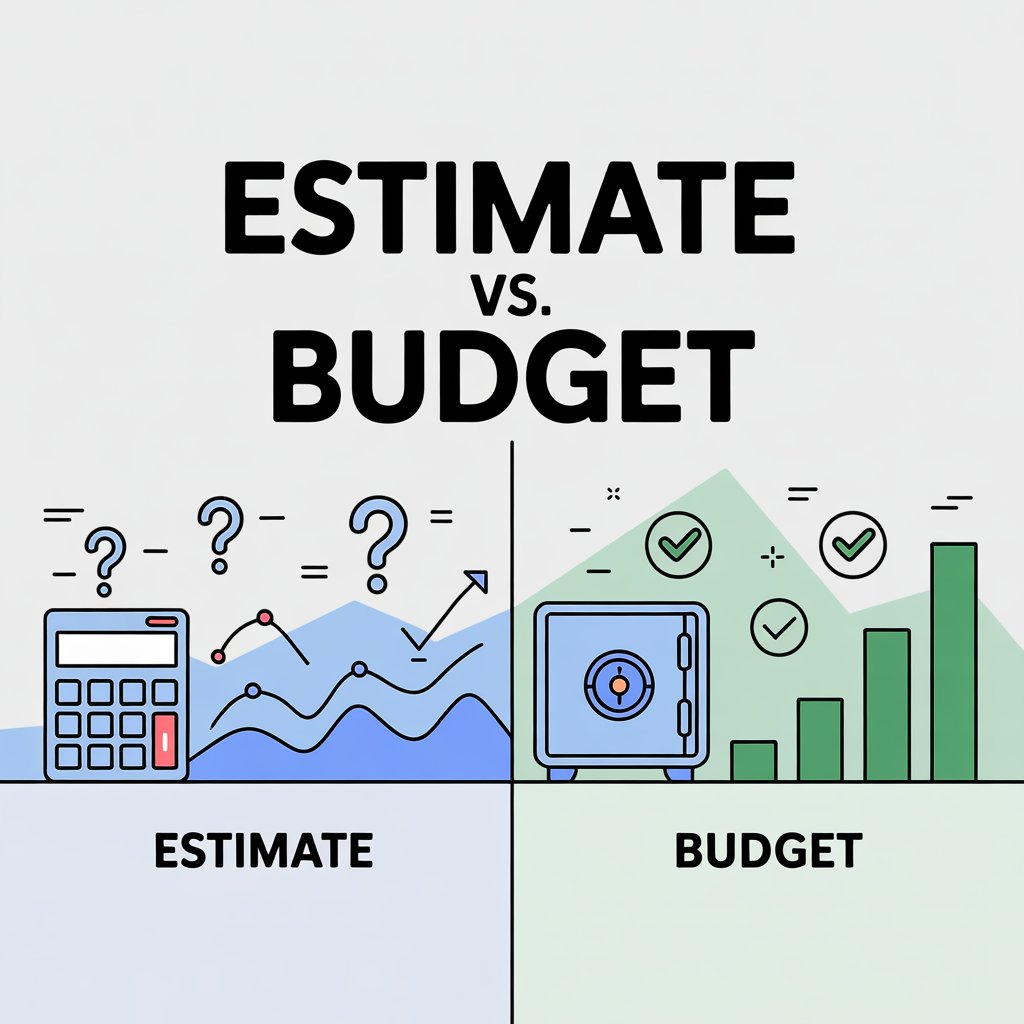
Understanding the difference between an estimate and a budget is fundamental for effective construction financial planning.
An estimate is a projected cost based on available data, often derived from preliminary drawings, historical costs, or unit rates. It represents an informed prediction of what the project might cost. In contrast, a budget is the approved allocation of funds for the project, reflecting financial constraints, financing arrangements, and risk considerations. Budgets guide spending, while estimates inform planning.
Cost forecasting vs. financial control: Estimates serve as a forecast, helping project teams anticipate material, labor, and overhead costs. Budgets, on the other hand, are tools for financial control, ensuring that expenses do not exceed the allocated limits. Continuous monitoring of actual costs against both estimates and budgets is essential for proactive decision-making.
Lifecycle data leverage: Modern construction projects increasingly use data from past projects, supplier quotes, and labor trends to refine estimates throughout the project lifecycle. Early estimates can be updated as the design progresses, providing a more accurate forecast for budget adjustments.
Aligning preliminary figures with final budgets using CSI Estimations: CSI Estimations plays a key role in bridging estimates and budgets. By consolidating takeoffs, historical cost data, and contingency planning, it ensures that preliminary estimates evolve seamlessly into reliable budgets. This alignment reduces the risk of cost overruns and supports financial transparency, giving stakeholders confidence in project viability from inception to completion.
Construction Cost Estimating: A Step-By-Step Guide
Accurate construction cost estimating is crucial for ensuring project success, reducing risks, and making informed decisions. A well-prepared estimate allows stakeholders to plan effectively, allocate resources wisely, and anticipate market-driven price fluctuations.
The Importance of Accurate Estimating
Accurate estimates reduce project risks by identifying potential cost overruns early. They enable data-backed decisions, allowing project managers and owners to choose materials, methods, and subcontractors with confidence. Using local market data ensures that pricing reflects current conditions, minimizing surprises during construction. CSI Estimations plays a pivotal role in generating precise early-stage figures, helping teams align expectations and budget forecasts.
8 Steps in Construction Estimating
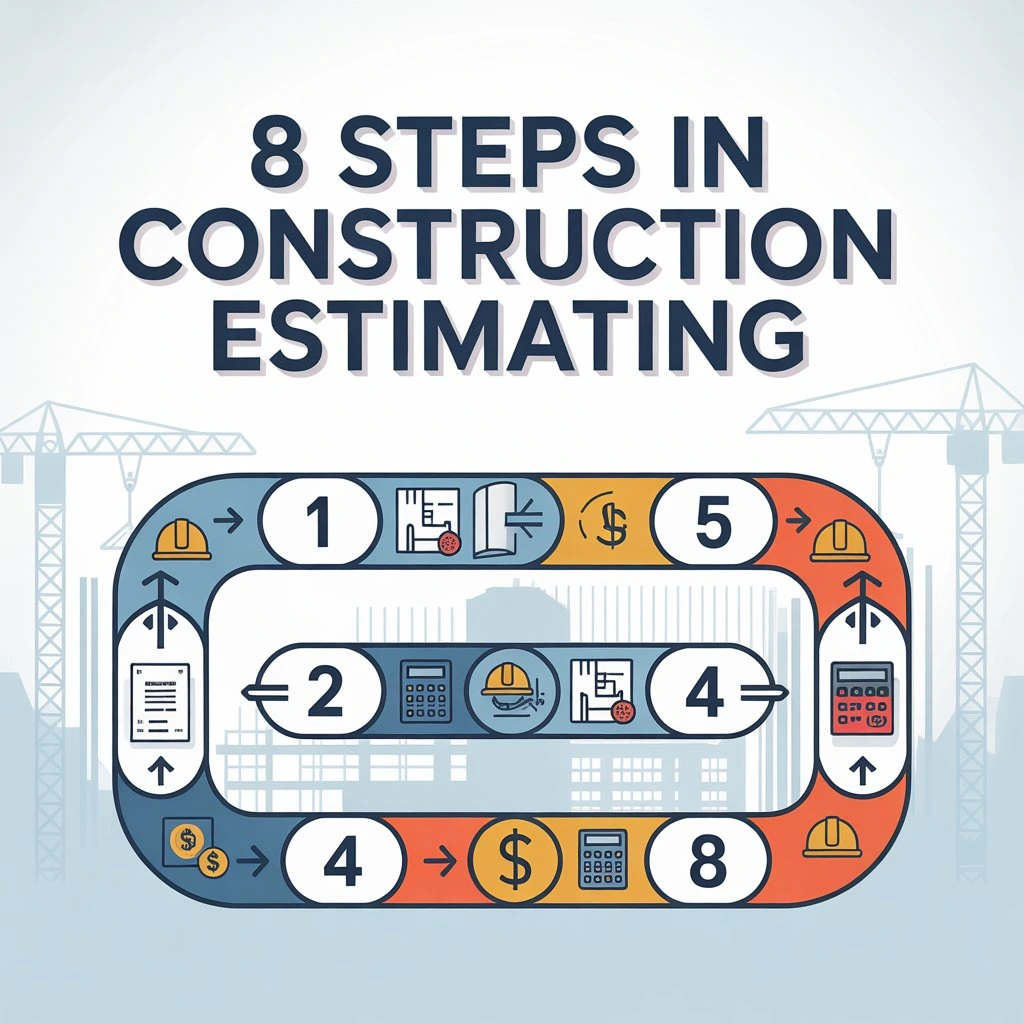
1. Review the Bid Package
Examine plans, specifications, and addenda carefully. Leverage historical and project-specific estimating data through the entire project lifecycle to build a reliable baseline.
2. Conduct a Site Visit
Assess site conditions, access routes, soil quality, utility connections, and environmental factors that may influence construction methods and costs.
3. Perform a Material Takeoff
Quantify materials by reviewing architectural and structural drawings. Accurate takeoffs are critical for cost prediction and scheduling.
4. Solicit Pricing from Suppliers and Vendors
Obtain multiple quotes to compare market rates. Consider regional price variations and lead times to ensure realistic estimates.
5. Evaluate Labor Requirements
Calculate labor based on productivity rates, project scope, and regional wage factors. Include overtime, union premiums, or specialty trades if required.
6. Determine Insurance and Bonding Costs
Account for liability insurance, performance bonds, and explore trends in building material pricing that may impact project costs.
7. Calculate Overhead and Indirect Costs
Include costs for equipment, supervision, temporary facilities, and other indirect expenses necessary for smooth project execution.
8. Account for Profit and Contingency
Add profit margins strategically while including contingency funds to cover unforeseen risks, design changes, or market fluctuations.
Turning an Estimate into a Bid Proposal
Convert detailed estimates into a competitive bid by formatting for submission, clearly outlining assumptions, and emphasizing value. CSI Estimation helps produce bid-ready outputs, ensuring proposals are accurate, comprehensive, and aligned with project objectives.
Estimating Construction Costs – Expanded 10-Step Process
A thorough construction cost estimate requires a structured approach that captures all project variables. Following a step-by-step methodology ensures accuracy, minimizes risk, and provides stakeholders with reliable financial guidance. CSI Estimations integrates these steps into a streamlined workflow to enhance precision and efficiency.
1. Agree on Cost Estimating Basis
Define the scope, level of detail, and assumptions that will guide the estimate. Clarify whether the estimate is conceptual, schematic, or detailed, and determine which units, assemblies, or cost codes will be used.
2. Conduct a Site Visit
Evaluate the site’s conditions, including access, soil, drainage, and utilities. On-site observations inform realistic cost projections and identify potential challenges early.
3. Prepare Base Estimate
Develop a preliminary estimate using available plans, historical data, and unit costs. This serves as the foundation for refining quantities and costs.
4. Review Base Estimate
Cross-check quantities, unit rates, and assumptions. Ensure consistency and alignment with project specifications before moving to vendor pricing.
5. Gather Supplier Pricing
Obtain quotes from suppliers and subcontractors to validate material and service costs. Compare multiple sources to account for regional variations and lead times.
6. Calculate Labor
Estimate labor requirements based on crew productivity, wage rates, project complexity, and schedule constraints. Factor in specialty trades or union requirements as needed.
7. Include Overhead & Insurance
Incorporate indirect costs such as supervision, equipment, temporary facilities, insurance, and bonding to ensure comprehensive budgeting.
8. Factor Risks & Contingencies
Identify potential risks including design changes, market fluctuations, or site-specific challenges. Allocate contingency funds to mitigate unforeseen costs.
9. Outline Communication Plan
Establish how estimates will be documented, shared, and updated among project stakeholders. A clear communication protocol reduces misunderstandings and ensures transparency.
10. Conduct Peer Review
Have the estimate reviewed by another estimator, engineer, or project manager. This final check helps catch errors, refine assumptions, and increase confidence in the accuracy of the estimate.
By following this expanded 10-step process, teams can produce reliable, defensible construction cost estimates. CSI Estimations ensures each step is data-driven, structured, and aligned with best practices for residential and commercial projects alike.
Types of Estimates
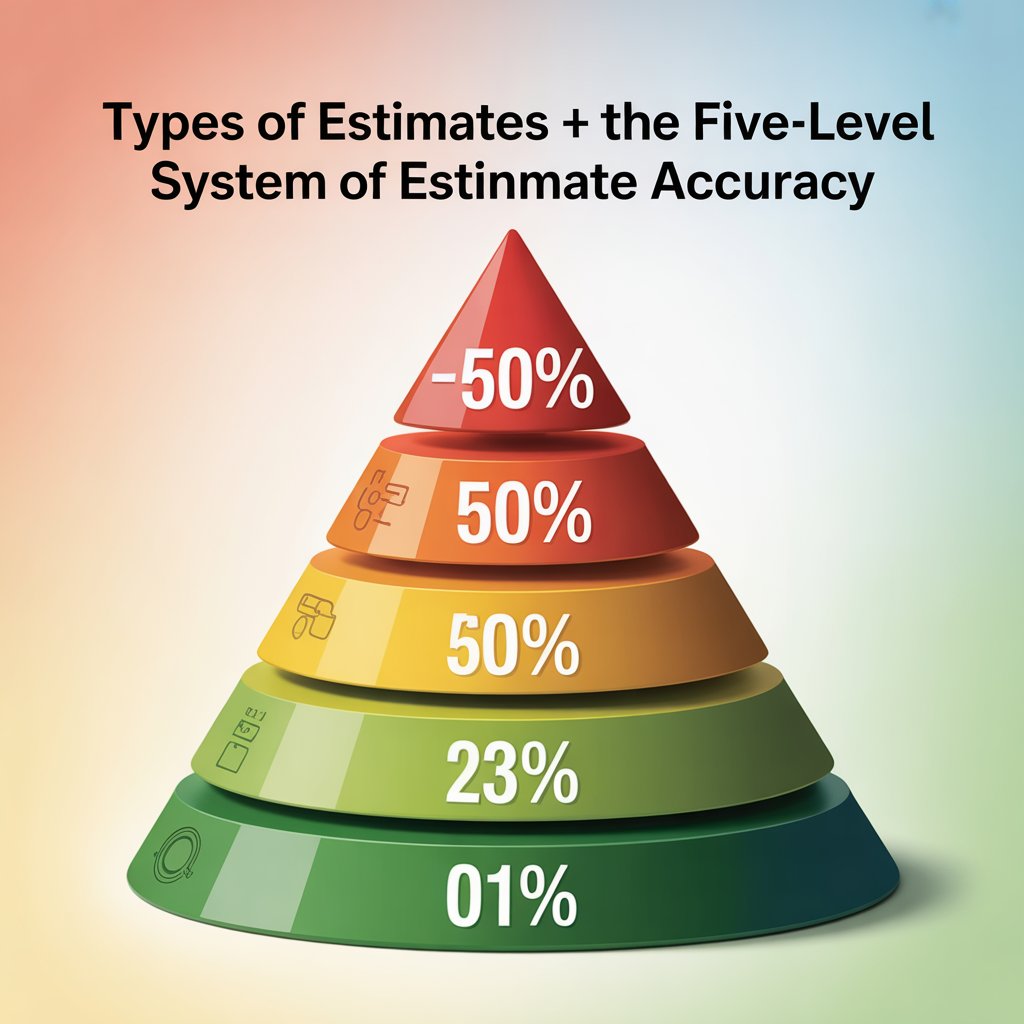
Understanding the different types of construction estimates is crucial for proper budgeting and project planning. Each type serves a specific purpose, from initial feasibility studies to detailed bid submissions. CSI Estimations helps streamline these processes by providing structured, reliable frameworks for every estimate stage.
Common Types of Construction Estimates
- Conceptual Estimates: Quick, high-level projections based on square footage, historical costs, or rough assemblies. Useful for feasibility studies and early decisions.
- Design Estimates: Derived from schematic or design development drawings. Provides more accuracy for budgeting and financing.
- Bid Estimates: Detailed estimates prepared to submit competitive proposals to clients or contractors. Accuracy is critical to avoid underbidding or overbidding.
- Control Estimates: Used during construction to track actual costs against projected costs. Helps manage scope changes and cost overruns.
The Five-Level System of Estimate Accuracy
- Order of Magnitude: Very early-stage, ±30–50% accuracy; based on general assumptions.
- Schematic: ±15–25% accuracy; uses preliminary design data.
- Design Development: ±10–15% accuracy; incorporates detailed drawings and specs.
- Construction Document: ±5–10% accuracy; final quantities and unit costs ready for bidding.
- Definitive: ±1–5% accuracy; highly precise, typically used for final project budgeting and financing.
Pros and Cons of Each Type
- Conceptual & Schematic: Fast and inexpensive but less precise.
- Design & Construction Document: More accurate but requires more data and time.
- Control Estimates: Provides monitoring benefits but depends on consistent cost tracking.
When to Use CSI Estimations
- Early-stage Conceptual: Quickly assess project feasibility.
- Detailed Bid Estimates: Produce accurate, defensible bids that minimize risk.
- Cost Control Phase: Continuously compare actual costs to the estimate, ensuring financial control and project efficiency.
This structured approach ensures that every phase of cost estimating aligns with project goals, reduces financial risk, and supports informed decision-making.
Methods of Estimating Construction Costs
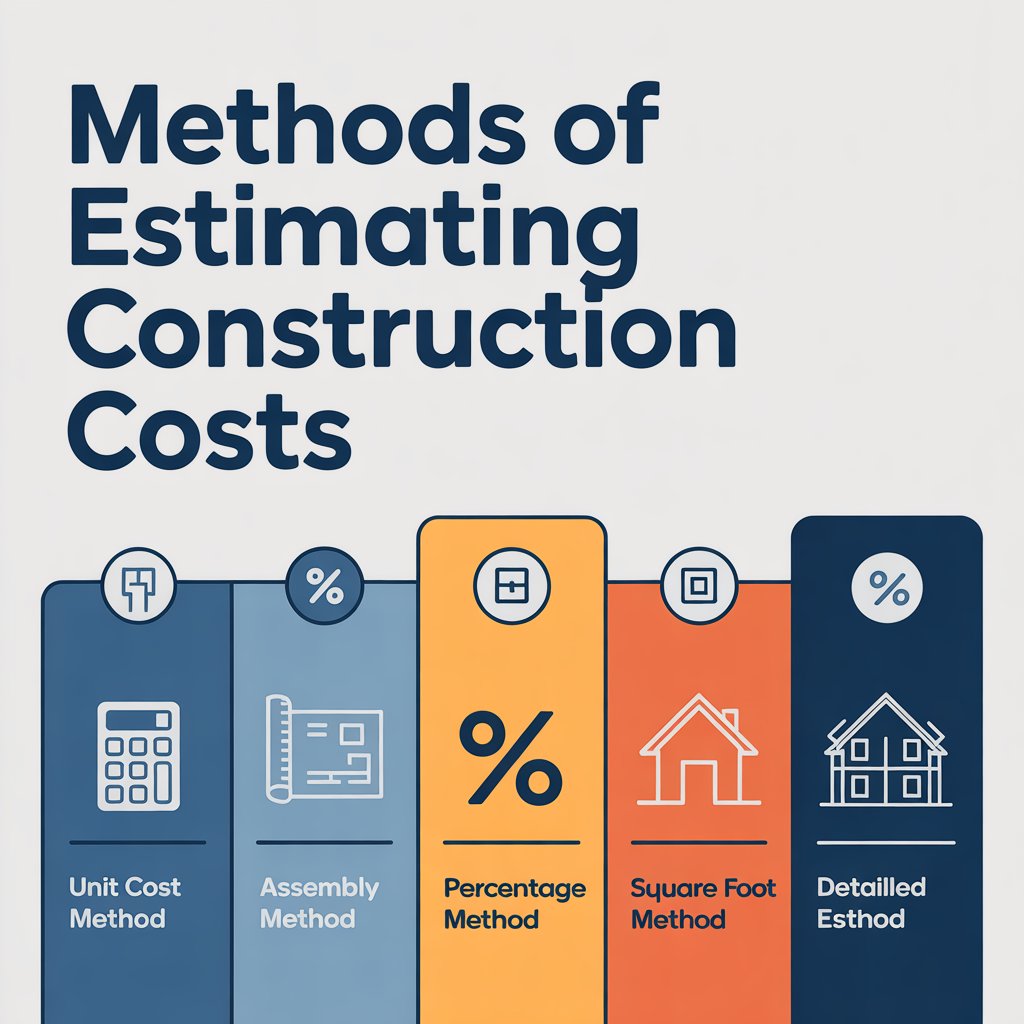
Selecting the right estimating method is critical for accuracy, efficiency, and project success. CSI Estimations provides a structured framework to apply these methods effectively based on project size, complexity, and data availability.
Unit Cost Estimating
This method calculates costs based on predefined unit rates for materials, labor, and equipment. Commonly used for repetitive elements like flooring, painting, or roofing. Advantages include simplicity and speed, while limitations include potential inaccuracies if unit costs are outdated or regional adjustments are ignored. CSI Estimations ensures unit rates are updated and aligned with local market data.
Stick Estimation
Also known as “elemental” or “component” estimating, this method breaks the project into individual construction elements (walls, slabs, foundations) and estimates each separately. Stick estimating provides better granularity than unit cost but requires detailed knowledge of building assemblies. CSI Estimations helps in organizing and validating these calculations efficiently.
Empirical Cost Inferencing Method
This technique relies on historical project data to infer costs for similar future projects. Useful when design information is limited but historical benchmarks are available. Its accuracy depends on the relevance of past data. CSI Estimations maintains databases for trend analysis and benchmarking.
Production Function Method
Focuses on the relationship between input resources (labor, material, equipment) and output quantities. Often applied in complex or large-scale projects where efficiency ratios are critical. CSI Estimations assists in modeling these functions for realistic cost projections.
Simplified Estimating Approach
Used for conceptual or early-stage estimates when detailed drawings are unavailable. Typically relies on square footage, cost per unit area, or assembly averages. While quick, this method sacrifices precision. CSI Estimations integrates simplified approaches with contingency allowances to reduce risk.
By understanding and applying these methods, project stakeholders can choose the most suitable approach for each phase, ensuring accurate, defensible construction cost estimates.
What Goes Into Your Construction Estimate
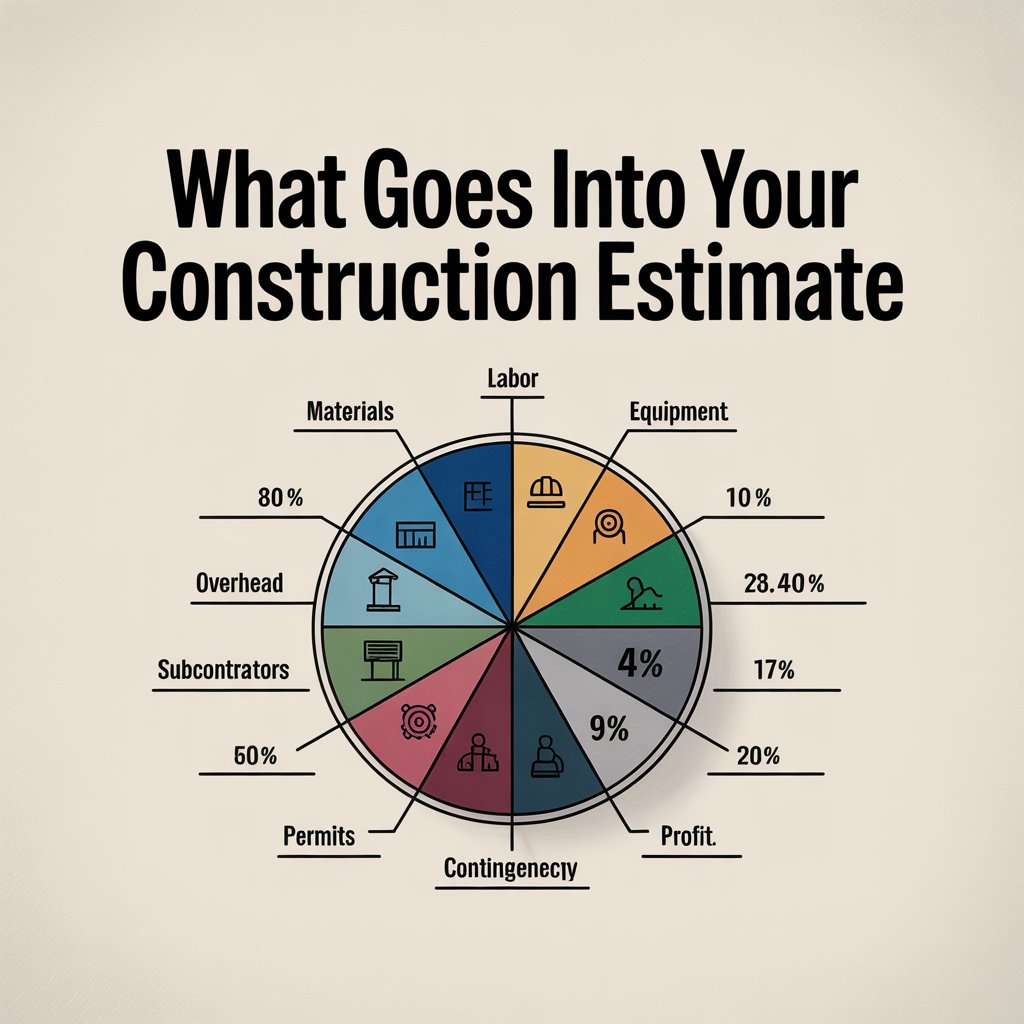
A comprehensive construction estimate accounts for every cost component to ensure accuracy and prevent budget overruns. CSI Estimations emphasizes a structured approach that captures all direct and indirect costs to produce reliable figures for decision-making.
Materials
Includes all construction materials such as concrete, steel, lumber, finishes, and fixtures. Accurate quantity takeoffs from blueprints are essential to avoid shortages or excesses. CSI Estimations leverages digital takeoff tools to quantify materials precisely.
Labor
Covers wages for skilled and unskilled workers, including productivity rates and regional wage variations. Proper labor planning ensures the project stays on schedule and within budget. CSI Estimations integrates historical labor data to forecast realistic costs.
Equipment
Costs for machinery, tools, rentals, and maintenance. Allocation depends on project scale and duration. CSI Estimations helps track equipment needs and utilization to optimize expenditures.
Overhead
Includes site supervision, temporary facilities, utilities, and administrative expenses. Overhead is crucial for smooth project operations and compliance. CSI Estimations provides templates to systematically include these indirect costs.
Insurance
Liability, workers’ compensation, and performance bonds protect against unforeseen events. Incorporating insurance early ensures financial and legal safeguards.
Permits
Local permits, inspections, and regulatory fees are essential for legal compliance and project approval.
Profit
Contractor or developer margin added to cover risk and reward. Proper margin calculation ensures competitiveness without sacrificing profitability.
Contingency
A buffer for unforeseen conditions, design changes, or market fluctuations. CSI Estimations recommends contingency percentages based on project type and risk profile.
By accounting for these components systematically, a construction estimate becomes a reliable foundation for budgeting, planning, and decision-making.
Construction Estimating Software
Modern construction estimating relies heavily on specialized software to improve speed, accuracy, and collaboration. Instead of relying only on manual calculations, digital tools help estimators extract quantities directly from blueprints, organize cost data, and generate professional reports. CSI Estimations integrates these technologies into its workflow to produce accurate and data-driven construction estimates.
Takeoff from Autodesk – Designed for Construction Cost Estimation
Autodesk Takeoff is a powerful tool used for performing digital quantity takeoffs from architectural and structural drawings. Estimators can measure materials, assemblies, and project elements directly from plans, reducing manual errors. The software also connects quantities with cost databases, making it easier to convert blueprint measurements into accurate cost estimates. This integration helps estimators move efficiently from plan analysis to financial forecasting.
Other Leading Construction Estimation Software
Several other platforms are widely used in the construction industry. Tools like CostX, Sage Estimating, and PlanSwift allow professionals to manage cost databases, track quantities, and generate detailed reports. These platforms support collaboration between estimators, contractors, and project managers, ensuring that all stakeholders work with consistent and updated cost information.
Benefits of Digital Takeoffs
Digital takeoff tools improve accuracy by minimizing manual measurement errors. They also speed up the estimating process by allowing quick adjustments when drawings change. Additionally, digital systems store historical cost data, enabling better comparisons and benchmarking across projects. This leads to more reliable budgeting and planning.
Role of CSI Estimations in Workflow Integration
CSI Estimations combines industry software with professional estimating expertise to create a structured and efficient workflow. By integrating digital takeoffs, cost databases, and project analysis, the team ensures that construction estimates are both precise and scalable for projects of different sizes. This approach improves transparency, reduces risk, and supports better financial planning throughout the project lifecycle.
Data-Driven Estimating for Long-Term Growth
Modern construction estimating is increasingly powered by data. Instead of relying only on assumptions or rough averages, contractors and estimators now use historical project data, market trends, and analytics to produce more reliable cost forecasts. CSI Estimations incorporates data-driven strategies to help construction professionals improve accuracy and support long-term business growth.
Using Historical Project Data
Past project records provide valuable insights into real costs for materials, labor productivity, and equipment usage. By analyzing previous projects with similar scope or scale, estimators can build more realistic projections and reduce guesswork. Historical databases also help identify cost patterns and common risk areas that may affect future projects.
Benchmarking Cost per Unit Area
Benchmarking allows estimators to compare project costs against standard metrics such as cost per square foot or cost per assembly. These benchmarks provide a quick reference point during early planning stages and help determine whether a project budget is realistic. Over time, maintaining consistent benchmarks improves the accuracy of cost forecasting.
Material Price Trends
Construction material prices often fluctuate due to supply chain disruptions, market demand, and economic conditions. Monitoring these trends helps estimators adjust cost projections before preparing bids or budgets. Data tracking ensures that pricing assumptions remain aligned with current market conditions.
Risk Analytics
Data analytics also plays a critical role in identifying potential risks such as labor shortages, price volatility, or design changes. By evaluating these risks early, estimators can incorporate contingency allowances and create more resilient financial plans.
Business Scalability Using CSI Estimations
CSI Estimations uses structured databases, historical benchmarks, and market insights to support scalable estimating processes. This data-driven approach enables contractors and developers to make informed decisions, reduce uncertainty, and maintain consistent profitability as their project portfolios grow.
How Construction Cost Estimators Manage Uncertainty
Uncertainty is a constant factor in construction projects. Changes in market conditions, labor availability, and material prices can significantly impact project budgets. Skilled estimators use structured forecasting techniques and risk management strategies to reduce these uncertainties. CSI Estimations applies analytical methods and market insights to help construction professionals prepare more resilient and adaptable cost estimates.
Market Volatility
Construction markets can fluctuate due to economic shifts, supply chain disruptions, or regional demand changes. Estimators manage this volatility by monitoring industry trends and adjusting cost assumptions accordingly. Maintaining updated pricing databases and reviewing supplier quotes regularly helps keep estimates aligned with real market conditions.
Labor Shortages
Labor availability can directly influence project timelines and costs. When skilled labor is limited, wages may increase and productivity can be affected. Estimators account for these factors by incorporating regional wage data, productivity benchmarks, and subcontractor availability into their cost calculations.
Material Price Inflation
Material prices such as steel, lumber, and concretecan rise quickly due to global supply and demand pressures. Estimators track material price trends and include escalation allowances in long-term projects. This proactive approach prevents underestimating costs and helps maintain realistic budgets.
Risk Modeling
Risk modeling involves analyzing potential uncertainties and assigning contingency allowances based on probability and impact. By evaluating historical data and project-specific risks, estimators can build financial buffers that protect project budgets. CSI Estimations integrates data analysis, historical benchmarks, and risk assessment strategies to manage uncertainty and deliver more dependable construction cost projections.
How to Improve Construction Estimate Accuracy
Improving the accuracy of construction cost estimates is essential for preventing budget overruns and maintaining project profitability. Estimators must combine structured processes, reliable data, and modern technology to produce dependable cost projections. CSI Estimations follows a systematic methodology that helps contractors and developers refine their estimating practices and reduce costly errors.
Develop a Template for Every Job
Standardized estimating templates ensure that every project follows a consistent structure. These templates include predefined cost categories such as materials, labor, equipment, and overhead, helping estimators avoid missing critical components.
Review Past Projects
Historical project data provides valuable insights into actual costs and productivity rates. By reviewing past estimates and comparing them with final project costs, estimators can identify patterns and improve forecasting accuracy for future projects.
Accurate Takeoffs
Precise quantity takeoffs are the foundation of reliable cost estimates. Carefully measuring materials directly from building blueprints ensures that quantities reflect the true scope of work. Digital takeoff tools further enhance accuracy and efficiency.
Check Labor Costs
Labor costs vary depending on region, project complexity, and workforce availability. Estimators must account for productivity rates, wage trends, and overtime factors to ensure labor calculations are realistic.
Countercheck Subcontractor Proposals
Subcontractor quotes should always be reviewed and compared with project requirements. Cross-checking proposals helps ensure that scope, materials, and labor details align with the overall estimate.
Verify Formulas
Errors in spreadsheets or estimating software formulas can significantly distort cost calculations. Regularly auditing formulas and calculation methods helps maintain reliable results.
Embrace Cloud Systems
Cloud-based estimating platforms allow teams to access updated cost data, collaborate in real time, and store project information securely. This improves transparency and consistency across multiple projects.
Turn to Automation
Automation tools can streamline repetitive tasks such as quantity calculations, cost updates, and report generation. This reduces manual workload and increases estimating efficiency.
Collaborate Early
Early collaboration between estimators, architects, contractors, and subcontractors ensures that project scope and cost assumptions are aligned from the beginning. This coordination reduces misunderstandings and improves estimated reliability.
Minimize Human Error Using CSI Estimations
CSI Estimations integrates structured workflows, digital tools, and industry expertise to minimize human error in the estimating process. By combining standardized templates, historical data analysis, and automated systems, CSI Estimations helps construction professionals produce more accurate, consistent, and reliable cost estimates.
Common Construction Cost Estimating Problems
Even experienced estimators face challenges when preparing construction cost estimates. Small miscalculations or overlooked factors can lead to serious budget overruns, delays, or profit loss. Understanding common estimating problems helps contractors and project managers improve accuracy and maintain financial control throughout the project lifecycle.
Improper Estimation of Labor Costs
Labor costs are one of the largest components of any construction estimate, yet they are frequently miscalculated. Estimators sometimes rely on outdated productivity rates or fail to consider factors such as worker experience, weather conditions, overtime, and regional wage differences.
For example, a project that assumes a standard productivity rate may run over budget if labor efficiency drops due to site constraints or complex designs. Accurate labor estimation requires updated wage data, realistic productivity assumptions, and clear scheduling. Reviewing historical project data can also help estimators identify more reliable labor cost patterns.
Failure to Factor Risks and Contingencies
Many estimates become inaccurate because they fail to include adequate contingencies for unexpected events. Construction projects often face uncertainties such as supply chain disruptions, design changes, permit delays, or site condition issues.
Without a contingency allowance, even small disruptions can significantly affect the final project cost. Professional estimators typically include a contingency percentage based on project complexity, risk exposure, and market conditions. Risk modeling and scenario planning help ensure estimates remain realistic even when unforeseen challenges arise.
Omitting Soft Costs
Another common estimating mistake is ignoring or underestimating soft costs. While direct construction expenses such as materials and labor are easy to identify, indirect costs are often overlooked.
Soft costs may include:
- Architectural and engineering fees
- Legal and consulting expenses
- Permit and inspection fees
- Financing costs
- Administrative overhead
If these expenses are excluded from the estimate, the project budget may appear lower than it actually is, leading to financial strain during later stages of the project.
Lack of Thorough Auditing
Construction estimates should never be treated as static documents. Without proper review and auditing, errors in calculations, quantities, or assumptions can easily go unnoticed.
Common auditing issues include incorrect formulas in spreadsheets, duplicate quantities, or missing cost items. Implementing a structured review process where estimates are checked by multiple team members significantly reduces the risk of costly mistakes. Regular estimate audits also improve transparency and reliability for stakeholders.
Solutions with CSI Estimations
Professional estimating services such as CSI Estimations help address many of these challenges by applying structured cost analysis methods and industry-standard practices. By using digital takeoff tools, updated pricing databases, and historical cost benchmarks, CSI Estimations improves estimate accuracy and minimizes financial risk.
These services also integrate risk assessments, cost tracking, and project lifecycle analysis to ensure that construction budgets remain aligned with real-world conditions. As a result, contractors, developers, and project managers can make more confident financial decisions throughout the project.
Common Mistakes to Avoid in Construction Estimating

Accurate construction estimating is essential for maintaining profitability and delivering projects within budget. However, even experienced professionals can make mistakes that lead to cost overruns, project delays, or financial losses. Understanding the most common estimating errors allows contractors and estimators to build more reliable budgets and avoid unnecessary risks.
Underbidding
Underbidding is one of the most common and costly mistakes in construction estimating. It occurs when a contractor submits a bid that is too low to realistically cover project costs. While a lower bid may increase the chances of winning a contract, it can severely reduce profit margins or even lead to financial losses during project execution.
Underbidding often happens when estimators underestimate labor requirements, overlook indirect costs, or fail to include adequate contingency allowances. To avoid this problem, estimators should conduct detailed quantity takeoffs, verify current material prices, and include realistic overhead and risk factors in the estimate.
Overreliance on Outdated Data
Construction costs change constantly due to fluctuations in labor wages, material prices, transportation costs, and market demand. Relying on outdated cost databases or past project figures without adjusting for current market conditions can lead to inaccurate estimates.
For example, material costs such as steel, concrete, and lumber can change significantly within a short period. Estimators should regularly update pricing information and review current supplier quotes to ensure estimates reflect real market conditions.
Ignoring Blueprint Revisions
Construction drawings often undergo multiple revisions during the planning and design stages. If estimators fail to account for the most recent blueprint updates, the estimate may exclude critical components or include outdated quantities.
Even small design modifications such as changes in wall dimensions, structural elements, or mechanical systems can significantly impact material quantities and labor costs. Maintaining version control and carefully reviewing updated drawings helps ensure the estimate remains aligned with the latest project specifications.
Poor Documentation
Poor documentation can create confusion and increase the risk of errors during both estimating and project execution. When assumptions, calculations, and cost sources are not clearly recorded, it becomes difficult to verify estimates or explain cost variations later in the project.
Detailed documentation should include quantity takeoff notes, pricing sources, subcontractor quotes, and contingency calculations. Clear documentation improves transparency, supports better decision-making, and allows teams to review estimates more effectively for future projects.
The Importance of Construction Estimating for Long-Term Growth and Business Health
Construction estimating is not only about calculating project costs, it plays a major role in maintaining the long-term stability and growth of a construction business. Accurate estimates help companies manage resources, control expenses, and make strategic decisions that strengthen their position in a competitive market. When estimates are well-prepared and data-driven, businesses can operate more confidently and reduce financial uncertainty.
Profit Margin Stability
One of the most important benefits of accurate construction estimating is maintaining stable profit margins. When project costs are properly calculated, contractors can price their bids in a way that covers all expenses while still generating reasonable profit.
If estimates are inaccurate, companies may underprice their services, leading to reduced margins or financial losses. By using structured estimating methods and reliable data, professionals can maintain consistent profitability across multiple projects.
Competitive Advantage
In the construction industry, winning bids often depends on offering competitive yet realistic pricing. Accurate estimating allows contractors to submit bids that are both attractive to clients and financially sustainable for the company.
Businesses that consistently provide reliable estimates build trust with developers, architects, and project owners. Working with professional estimating support such as CSI Estimations helps companies prepare precise bids that improve their chances of winning projects while maintaining profitability.
Reputation Building
A construction company’s reputation is strongly influenced by how well it manages project costs. Projects that stay within budget demonstrate professionalism, planning, and reliability.
Accurate estimates reduce the likelihood of unexpected cost increases during construction. When contractors deliver projects close to their initial estimates, clients gain confidence in their ability to manage future work effectively.
Financial Sustainability
Long-term financial health in construction depends on careful planning and cost control. Estimating helps businesses forecast expenses, allocate resources, and plan future investments.
Reliable cost forecasting also allows companies to manage cash flow, plan workforce requirements, and prepare for market fluctuations. With structured estimating systems and support from CSI Estimations, construction businesses can maintain financial stability while continuing to grow and take on larger projects.
Construction Estimation Software Case Studies
Modern construction firms increasingly rely on digital estimating software to improve accuracy, efficiency, and collaboration. By integrating advanced tools into their workflows, companies can streamline quantity takeoffs, analyze project data, and generate reliable cost estimates. Many leading construction firms have adopted technology-driven estimating systems to enhance decision-making and reduce project risks.
Windover Construction
Windover Construction is known for integrating advanced construction technology into its estimating and project management processes. The company utilizes digital takeoff tools and cloud-based estimating platforms to improve the speed and precision of cost calculations.
By leveraging software-driven workflows, the estimating team can extract quantities directly from digital blueprints, minimizing manual measurement errors. This approach allows estimators to quickly update costs when design changes occur, ensuring that project budgets remain accurate throughout the planning stage.
Technology also enables better collaboration between estimators, project managers, and design teams. With centralized data and automated reporting, CSI Estimations and similar professional estimating systems help ensure that cost information remains consistent and transparent across all stakeholders.
Clayco
Another strong example of technology-driven estimating is Clayco, a major design-build construction firm known for its innovation in construction technology. Clayco uses integrated estimating software and building information modeling (BIM) tools to create detailed and data-driven cost projections.
Their estimating process combines digital takeoffs, historical cost databases, and predictive analytics to evaluate project feasibility early in the design phase. This allows the company to identify potential cost risks and optimize materials or construction methods before construction begins.
Through the use of digital estimating platforms, companies like Clayco can generate faster bids, reduce errors, and improve project planning accuracy. When these advanced tools are combined with professional estimating expertise from CSI Estimations, contractors gain a powerful framework for producing reliable, competitive, and scalable construction cost estimates.
Cost Estimating Glossary
Understanding key construction estimating terms is essential for contractors, developers, and project managers working with building blueprints and cost projections. CSI Estimations uses these industry-standard concepts as the foundation of every accurate and professional estimate.
Takeoff:
A takeoff also known as a quantity takeoff is the process of measuring and listing all materials required for a construction project directly from building blueprints. Estimators extract dimensions, areas, volumes, and counts from architectural and structural drawings to determine how much of each material is needed. An accurate takeoff is the starting point of every reliable construction cost estimate. CSI Estimations performs detailed takeoffs across all trades, ensuring no material is missed or duplicated.
Overhead:
Overhead refers to the indirect costs required to run a construction project and business that are not directly tied to physical construction work. These include site supervision, temporary utilities, office administration, equipment depreciation, and project management expenses. Overhead is typically calculated as a percentage of direct costs and must be included in every estimate to avoid profit erosion. CSI Estimations systematically accounts for overhead in every cost breakdown to ensure estimates reflect true project expenses.
Contingency:
A contingency is a financial reserve added to a construction estimate to cover unforeseen conditions, design changes, material price fluctuations, or unexpected site challenges. Contingency percentages vary based on project complexity and risk level typically ranging from 5% to 15%. Including a well-calculated contingency protects both contractors and clients from budget surprises. CSI Estimations applies risk-based contingency analysis tailored to each project’s specific conditions.
Unit Cost:
Unit cost is the price assigned to a single measurable unit of work or material for example, cost per square foot of flooring, cost per cubic yard of concrete, or cost per linear foot of framing. Unit costs form the backbone of quantity-based estimating, allowing estimators to quickly calculate total costs by multiplying quantities by their respective unit rates. CSI Estimations maintains updated unit cost databases aligned with current regional market rates to ensure competitive and accurate pricing.
Bid Leveling:
Bid leveling, also called bid analysis, is the process of comparing multiple subcontractor or supplier bids to ensure they cover the same scope of work before selecting the most competitive offer. This process helps identify gaps, exclusions, or inconsistencies between bids that could lead to unexpected costs after contract award. Proper bid leveling protects project budgets and ensures fair, apples-to-apples comparisons. CSI Estimations applies structured bid leveling techniques to help clients make informed procurement decisions.
Value Engineering:
Value engineering is a systematic review of construction materials, methods, and systems with the goal of reducing costs without compromising quality, safety, or performance. It may involve substituting a material with a more cost-effective alternative, redesigning a structural element, or adjusting construction sequencing to improve efficiency. Value engineering is most effective when applied early in the design phase.
CSI Estimations integrates value engineering analysis into the estimating process to help clients optimize budgets and maximize project value.
Frequently Asked Questions
Contractors, developers, and homeowners often have questions about the construction estimating process. CSI Estimations has compiled answers to the most frequently asked questions to help you better understand how blueprint-based cost estimation works and what to expect from a professional estimating service.
Is Construction Estimating Hard?
Construction estimating can be challenging, particularly for those without technical experience in reading blueprints, performing quantity takeoffs, or understanding regional labor and material costs. It requires a strong grasp of construction methods, pricing databases, and risk assessment. However, with the right tools, structured processes, and professional support, accurate estimating becomes manageable and repeatable. CSI Estimations simplifies this process by handling the technical complexity on behalf of contractors and developers, delivering precise, reliable estimates without the guesswork.
Who Creates Cost Estimates?
Construction cost estimates are typically prepared by professional estimators, general contractors, quantity surveyors, or specialized estimating firms. In early design phases, architects may produce conceptual budgets to assess feasibility. As the project progresses and drawings are finalized, detailed estimates are prepared by experienced estimators who analyze blueprints, perform material takeoffs, and apply current market pricing. CSI Estimations provides trade-specific and full-project estimating services for contractors, developers, and construction managers across residential and commercial sectors.
Is Estimating Stressful?
Estimating can be a high-pressure task, especially when bid deadlines are tight or project scopes are complex. The responsibility of producing accurate numbers that directly affect project profitability and contract awards creates significant pressure on estimators. Common stressors include incomplete drawings, fluctuating material prices, and last-minute design changes. Partnering with a professional service like CSI Estimations reduces this pressure by providing structured, detail-oriented estimating support that allows contractors to submit competitive bids with confidence and accuracy.
What Is the Rule of Thumb for Construction Estimating?
A common rule of thumb in construction estimating is to calculate costs based on a price per square foot benchmark derived from recent comparable projects in the same region. Regional benchmarks from similar completed builds provide a useful starting point for early budget orientation when detailed drawings are not yet available. However, this method is only reliable as an initial orientation tool. Final estimates must always be based on detailed quantity takeoffs, current material pricing, and labor analysis. CSI Estimation goes beyond simple rules of thumb to deliver data-driven, itemized cost projections tailored to each specific project.
What Should a Construction Estimate Look Like?
A professional construction estimate should include a clear, itemized breakdown of all project costs. This typically covers direct costs such as materials, labor, and equipment, as well as indirect costs including overhead, insurance, permits, and contingency allowances. It should also outline key assumptions, scope inclusions and exclusions, and a profit margin. A well-structured estimate improves transparency, supports informed decision-making, and serves as a reliable reference throughout the project lifecycle. CSI Estimations produces professionally formatted estimates that meet industry standards and provide clients with complete financial clarity before construction begins.
What Is the Most Common Way Contractors Estimate Costs?
The most common method contractors use to estimate costs is the quantity takeoff combined with unit pricing. This involves measuring all materials and labor requirements directly from building blueprints and applying current market rates to each item. Many contractors also rely on historical data from past projects to benchmark costs and validate new estimates. Digital estimating software has made this process faster and more accurate by automating calculations and linking quantities to live pricing databases. CSI Estimations combines quantity takeoff expertise, updated cost databases, and industry experience to produce estimates that are both competitive and financially sound.
Mastering a Construction Cost Estimate: The Ultimate Guide for Successful Projects
A well-prepared construction cost estimate is the backbone of every successful building project. From early feasibility planning to final bid submission, mastering the estimating process ensures financial clarity, competitive pricing, and controlled risk. Accurate estimates not only protect profit margins but also strengthen client confidence and support long-term business growth. By combining structured methodology, market awareness, and professional support from CSI Estimations, construction professionals can significantly improve precision and deliver projects on time and within budget.
Understanding the Basics of Construction Cost Estimation
Construction cost estimation is the process of forecasting the total expenses required to complete a building project based on blueprints, specifications, and project requirements. It covers every financial component from raw materials and labor to equipment, permits, overhead, and contingency allowances. A reliable estimate provides a clear financial roadmap that guides decision-making from concept through construction completion. Without a solid estimate, projects are vulnerable to budget overruns, scope disputes, and financial losses. CSI Estimations builds every estimate on a foundation of accurate blueprint analysis, updated market data, and industry-proven cost methodologies to ensure clients have the financial clarity they need before breaking ground.
Who Is Responsible for Construction Cost Estimating?
Construction cost estimating is a shared responsibility that involves multiple professionals depending on the project stage. During early design phases, architects and designers may prepare conceptual budgets to assess project feasibility. As drawings develop, professional estimators and quantity surveyors take over, performing detailed takeoffs and applying current unit pricing. General contractors also prepare estimates when assembling competitive bids, often coordinating input from subcontractors and material suppliers. Construction managers contribute to cost planning in design-build or negotiated contracts where budgeting begins early. CSI Estimations supports all of these roles by providing trade-specific and full-project estimating services that bring accuracy, structure, and professional credibility to every stage of the cost planning process.
4 Steps to Developing a Construction Cost Estimate
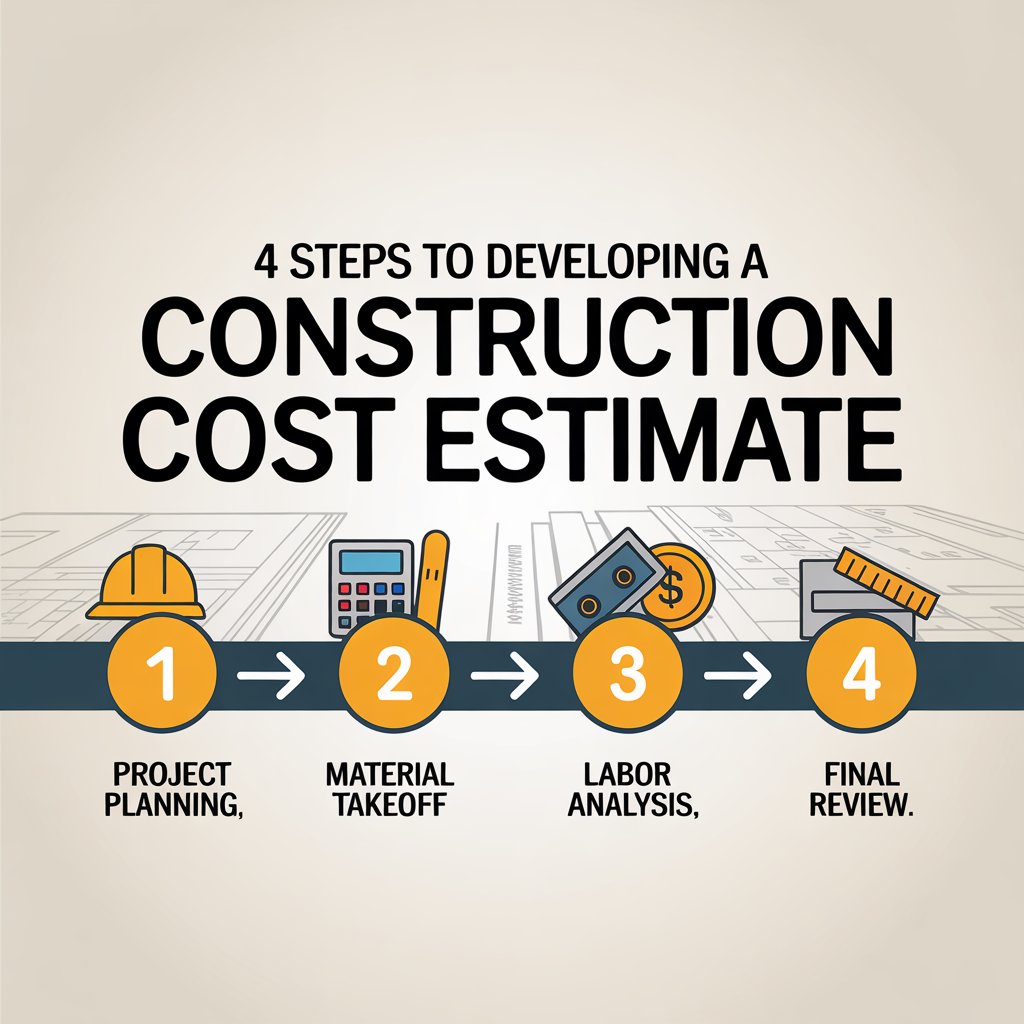
Developing a reliable construction estimate requires a disciplined, step-by-step approach that ensures every cost component is captured and validated before submission.
1. Capture the Scope of Work:
Begin by thoroughly reviewing all drawings, specifications, and contract documents to define the full project scope. Clearly identifying what is included and excluded prevents scope gaps, miscommunication, and costly misunderstandings later in the project. CSI Estimations conducts a comprehensive scope review at the start of every project to ensure nothing is overlooked.
2. Material Quantity Takeoff:
Perform a detailed measurement of all required materials directly from building blueprints. This includes everything from concrete, steel, and framing to finishes, fixtures, and mechanical components. Accurate quantity takeoffs are critical because every pricing decision depends on reliable material counts. CSI Estimations uses digital takeoff tools and manual verification to ensure quantities are precise and complete across all trades.
3. Pricing the Work:
Apply current market rates to all measured quantities, including materials, labor, equipment, subcontractor work, and indirect costs such as insurance, overhead, and permits. This step requires updated pricing databases, supplier quotes, and an understanding of regional wage variations. CSI Estimations maintains live cost databases and supplier relationships to ensure pricing reflects real market conditions at the time of estimate preparation.
4. Validating the Estimate:
Once compiled, the estimate must be reviewed and validated before submission. This involves cross-checking quantities, verifying unit rates, reviewing assumptions, and ensuring all scope items are accounted for. A peer review process adds an additional layer of quality control. CSI Estimations applies a structured validation process to every estimate, reducing human error and increasing confidence in the final numbers before they reach the client or contractor.
How to Obtain an Accurate Construction Estimate
Achieving a truly accurate construction estimate requires more than just measuring quantities and applying unit prices. It demands careful planning, updated data, and strong collaboration throughout the process.
Plan Each Phase in Detail:
Break the project into clearly defined phases such as site preparation, foundation, structure, envelope, MEP systems, and finishes. Estimating each phase separately allows for greater precision and makes it easier to identify where cost assumptions are strongest or weakest. CSI Estimations structures every estimate around detailed phase planning to ensure comprehensive and organized cost coverage.
Prepare a Master Checklist
A master checklist ensures that no cost item is accidentally omitted from the estimate. It should cover all material categories, labor classifications, equipment needs, permit fees, insurance costs, and contingency allowances. Standardized checklists reduce the risk of missing items and improve consistency across multiple projects.
Determine Equipment Needs
Identify all machinery, tools, and equipment required for the project, including rental costs, fuel, maintenance, and operator fees. Equipment costs are frequently underestimated, particularly for projects involving heavy excavation, crane lifts, or specialized installations. Accurately forecasting equipment needs protects the overall project budget from unexpected expenses.
Understand Material Pricing Fluctuations
Construction material prices, including steel, lumber, concrete, and copper, can shift significantly due to supply chain disruptions, inflation, and market demand. Estimators must monitor current pricing trends and include escalation allowances for projects with longer timelines. CSI Estimations tracks material price movements and adjusts cost projections accordingly to keep estimates realistic and competitive.
Collaborate With a Transparent General Contractor.
Working closely with a transparent and experienced general contractor is one of the most effective ways to improve estimate accuracy. A knowledgeable contractor brings real-world insight into labor productivity, subcontractor pricing, and site-specific challenges that may not be visible in the drawings alone. Open communication between the estimator, contractor, and project owner ensures that all assumptions are aligned and that the final estimate reflects both design intent and construction reality. CSI Estimations values this collaborative approach and works alongside contractors and project teams to produce estimates that are grounded, transparent, and fully defensible.
Conclusion: From Blueprint to Accurate Cost Projection
Recap of the blueprint-to-estimate process
Taking building blueprints and transforming them into accurate construction cost projections is both a technical discipline and a strategic business function. Throughout this guide, we have walked through every essential stage of the process, from understanding what construction cost estimating is and performing detailed quantity takeoffs to applying unit pricing, managing risk, and turning estimates into competitive bid proposals. Each step plays a critical role in ensuring that projects are financially sound before a single shovel hits the ground.
Importance of structured estimating
Structured estimating is not optional; it is the foundation of every successful construction project. When contractors, developers, and project managers follow a disciplined estimating methodology, they reduce the risk of cost overruns, protect profit margins, and build stronger relationships with clients. Projects that begin with well-prepared, data-backed estimates are far more likely to be delivered on time, within budget, and to the satisfaction of all stakeholders. Skipping steps or relying on rough guesses may save time early on, but it almost always leads to financial surprises, disputes, and lost profitability down the line.
Data-driven forecasting is rapidly becoming the standard in modern construction estimating. By leveraging historical project data, regional benchmarks, material price trends, and labor productivity analysis, construction professionals can move beyond assumptions and build estimates grounded in real-world evidence. This approach not only improves accuracy on individual projects but also supports long-term business growth by creating a reliable, repeatable estimating process that strengthens competitive positioning over time.
How CSI Estimations transforms blueprint analysis into reliable construction cost projections:
At the center of this process is CSI Estimations, a professional estimating service dedicated to transforming complex building blueprints into clear, reliable, and actionable construction cost projections. Whether you are preparing a conceptual budget for a new residential development, performing a detailed material takeoff for a commercial build, or assembling a bid-ready proposal under a tight deadline, CSI Estimations brings the expertise, technology, and structured methodology needed to get the numbers right. By combining accurate quantity takeoffs, updated market pricing, risk-based contingency planning, and thorough validation, CSI Estimations ensures that every estimate is not just a number, but a financially defensible roadmap that empowers confident decision-making from blueprint to project completion.
Was This Article Helpful?
We hope this complete guide on how to take building blueprints and get construction estimate cost has given you the clarity, confidence, and practical knowledge to approach your next project with a structured and data-driven estimating process. Whether you are a contractor preparing competitive bids, a developer planning a new build, or a project manager managing construction budgets, accurate estimating is the key to financial success and project profitability.
Explore More Resources From CSI Estimations
If you found this article valuable, we encourage you to explore our related guides and resources designed to help construction professionals master every aspect of the estimating process. Our internal resource library covers topics including material takeoff techniques, trade-specific estimating guides, bid preparation strategies, and construction cost benchmarking. Visit our blog regularly for updated insights, industry trends, and practical estimating tips from the CSI Estimations team.
👉 Related Reading: What Does Cost Estimating Services Mean For Project Management?
👉 Related Reading: How Much Does a Construction Estimator Cost?
👉 Related Reading: What Is A Quantity Takeoff, And How Are They Done?
Contact CSI Estimations Today
If you are ready to move beyond guesswork and get a professionally prepared construction cost estimate based on your building blueprints, CSI Estimations is here to help. Our team of experienced estimators specializes in residential and commercial projects of all sizes, delivering accurate, detailed, and bid-ready cost projections tailored to your specific scope, location, and timeline.
Do not let inaccurate estimates cost you contracts, profit, or peace of mind. Reach out to CSI Estimations today and let us transform your blueprints into a reliable financial roadmap for your next project.